Replacement Cost Value (RCV) vs. Actual Cash Value (ACV)
Discover how Replacement Cost Value (RCV) differs from Actual Cash Value (ACV) in insurance policies, highlighting their effect on claims and depreciation.
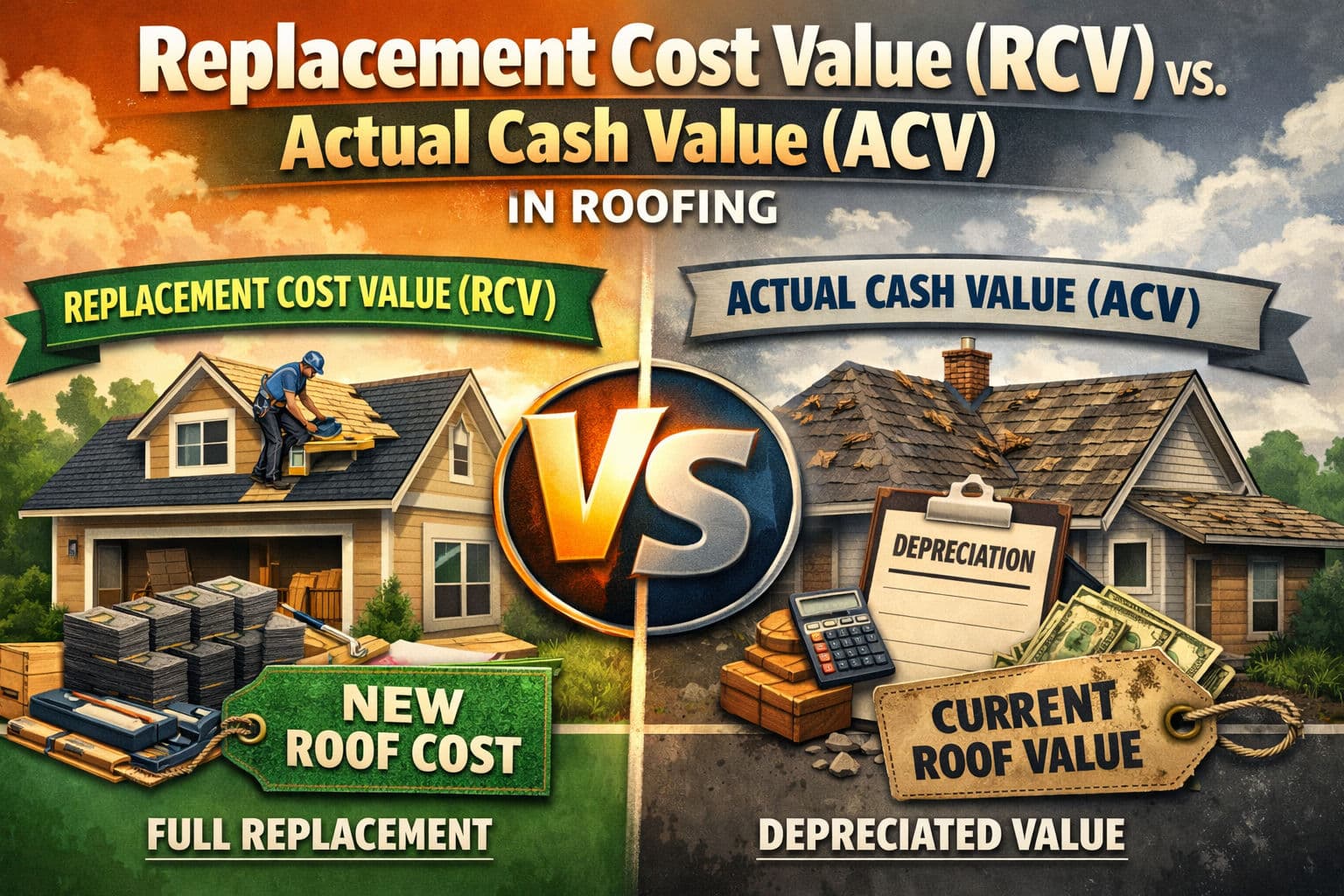
Your home, roof, and personal property can be valued in two different ways, depending on your insurance policy: Replacement Cost Value (RCV) or Actual Cash Value (ACV). The key difference between the two is depreciation.
Replacement Cost Value (RCV)
What it means:
RCV is the cost to repair or replace damaged property with new materials of similar kind and quality, without deducting for age or wear.
Plain English:
“What would it cost today to replace this with a new one?”
Example:
Cost to replace your roof today: $20,000
Even if the roof is old, the RCV is still $20,000
Key point:
RCV does not factor in depreciation.
Actual Cash Value (ACV)
What it means:
ACV is the replacement cost minus depreciation for age, wear and tear, and condition.
Formula:
ACV = RCV − Depreciation
Plain English:
“What was this item worth right before it was damaged?”
Example:
Replacement cost today (RCV): $20,000
Depreciation due to age and wear: $8,000
ACV payout: $12,000
How depreciation affects roofs
Roofs typically depreciate at an average rate of about 5% per year after the date of installation. The older the roof, the greater the depreciation deducted under an ACV calculation.
How insurance claims are usually paid
RCV policies (most common):
The insurance company pays the ACV portion first (RCV minus depreciation and deductible).
Once repairs are completed and documentation is submitted (signed contract, final invoice, photos), the insurer releases the recoverable depreciation, bringing the total payment up to the full RCV.
ACV-only policies (non-recoverable depreciation):
The insurer pays only the ACV.
The depreciation amount is not reimbursed, even after repairs are completed.
The homeowner is responsible for the difference between ACV and the actual replacement cost.
Quick comparison
Feature
RCV ACV
Deducts depreciation?
❌ No ✅ Yes
Pays for full replacement cost?
✅ Yes ❌ No
Depreciation reimbursed after repairs?
✅ Yes ❌ No
Out-of-pocket risk
Lower Higher, especially on older roofs
Typical premium
Higher Lower
Working with your insurance company
Colorado Front Range Roofing is a preferred contractor with most major insurance carrier.