How Roofing Tech Actually Helps You as a Homeowner
See how drones, AI tools, and digital planning actually make your roofing project faster, safer, and more accurate from inspection through long-term maintenance.
After a storm — or even during a routine inspection — most homeowners are asking the same questions:
Was any damage missed?
How long will it take to get an estimate?
Will communication be clear?
Will my project get delayed?
Am I going to deal with surprise costs later?
These are valid concerns. Roofing has traditionally been slow, manual, and sometimes unpredictable.
Today, that’s changing.
Many roofing companies now talk about drones, artificial intelligence (AI), and advanced software. But what does that actually mean for you as a homeowner?
Here’s how modern roofing technology directly impacts your experience — making your project faster, safer, and far more predictable from start to finish.
AI Is Quietly Transforming Roofing
Artificial intelligence is now powering many of the tools used in modern roofing.
It helps analyze images, detect damage, calculate measurements, and even assist with scheduling and communication. Importantly, AI doesn’t replace experienced roofing professionals — it enhances their accuracy, speed, and decision-making.
For you, that means fewer delays, fewer mistakes, and better overall results.
Faster, More Accurate Roof Inspections
After severe weather, roof damage isn’t always visible from the ground. Traditional inspections rely heavily on manual checks, which can miss subtle issues.
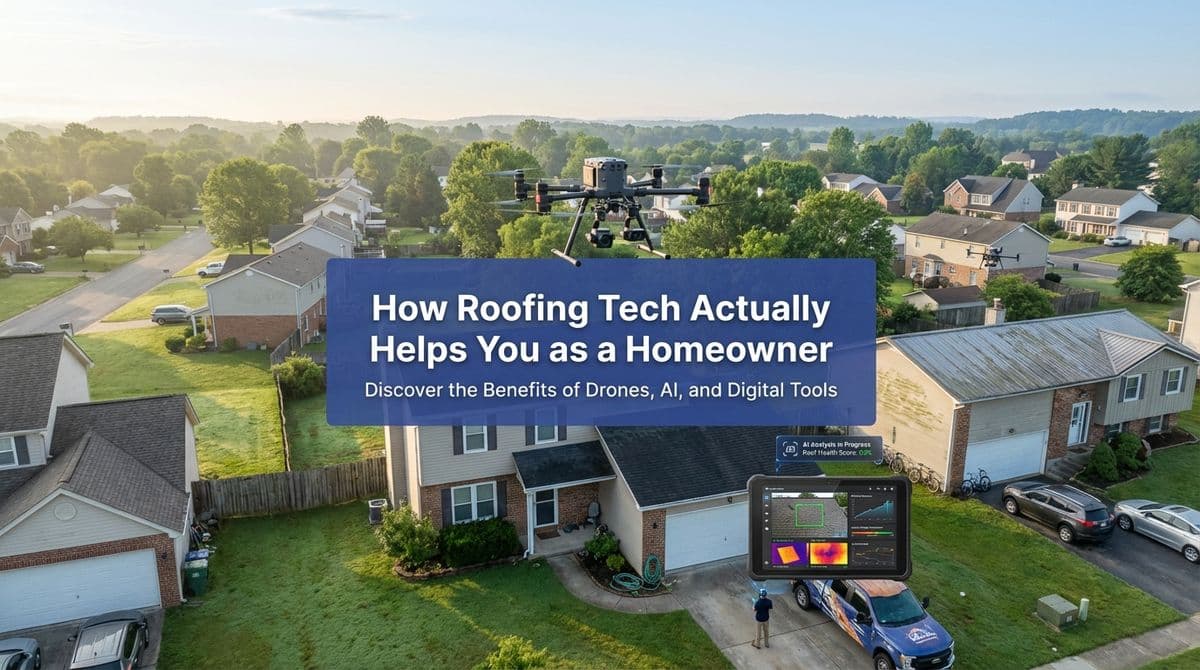
Today, drones combined with AI-assisted imaging capture high-resolution images from multiple angles. These systems help identify:
Missing or lifted shingles
Hail impact marks and granule loss
Soft spots or structural sagging
Flashing and valley damage
AI helps flag potential problem areas instantly, while trained professionals verify everything on-site.
The result: a faster, more thorough inspection with significantly less guesswork.
AI-Powered Measurements & Faster Estimates
Waiting days — or even weeks — for an estimate can be frustrating, especially when repairs feel urgent.
Modern roofing technology uses aerial imagery and AI-driven measurement tools to create a precise 3D model of your roof. These systems calculate:
Total square footage
Roof pitch and slope
Ridge, hip, and valley lengths
Exact material quantities
Because this data feeds directly into estimating software, contractors can often deliver detailed, accurate quotes within 24–48 hours.
This automated estimating and takeoff process reduces human error, prevents over- or under-ordering materials, and minimizes the risk of surprise costs later.
The 24/7 Virtual Sales Rep & Better Communication
One of the biggest frustrations homeowners face is poor communication.
Modern roofing companies now use systems that function like a 24/7 virtual sales representative — ensuring you’re never left waiting for answers.
That means:
Website inquiries receive immediate responses
Appointments can be scheduled online anytime
After-hours questions don’t sit unanswered
Text and email updates keep you informed
These tools don’t just improve communication — they improve the entire customer experience. From your first inquiry to final project completion, everything feels more organized, transparent, and responsive.
Automated Project Planning & Smarter Scheduling
Technology doesn’t just speed up inspections — it connects the entire process.
Because measurements, estimates, and material orders are digitally linked, contractors can:
Order the right materials the first time
Check supplier availability before scheduling
Coordinate crews more efficiently
Avoid overlapping projects that cause delays
This creates a fully automated workflow — from estimating to project planning to scheduling — keeping your project on track and reducing unexpected slowdowns.
Cost Savings Through Efficiency & Fewer Mistakes
Small errors in roofing projects can quickly turn into expensive problems.
Digital tools and automation help eliminate common issues like:
Material waste
Ordering mistakes
Labor inefficiencies
Unnecessary return visits
Fewer errors mean fewer change orders, fewer delays, and better cost control overall.
While no project is completely immune to surprises, modern technology significantly reduces avoidable ones — helping protect your investment.
Increased Safety & Reduced Risk
Roofing work will always involve some level of risk, but technology helps minimize unnecessary exposure.
Drone inspections reduce the need for repeated foot traffic during evaluations. When contractors do access your roof, they already know where to focus.
This leads to:
Less wear on your shingles
Lower risk of accidental damage
Safer working conditions
Reduced liability concerns
Technology enhances safety without replacing skilled craftsmanship.
Predictive Maintenance & Long-Term Roof Health
One of the most valuable benefits of modern roofing systems is long-term tracking.
Digital records create a complete history of your roof, including:
Inspection reports
Repairs and materials used
Warranty documentation
Installation timelines
Recommended maintenance schedules
Over time, this data allows contractors to identify patterns and predict when maintenance may be needed.
Instead of reacting to leaks or emergencies, homeowners can take a proactive approach.
This also opens the door to ongoing maintenance programs — helping extend the life of your roof, reduce major repair costs, and create a more predictable long-term plan.
A Better, More Transparent Buying Experience
Modern technology also improves how homeowners evaluate and choose roofing services.
Clear digital estimates, visual reports, and organized communication make it easier to:
Understand your options
Compare proposals
Make informed decisions
Move forward with confidence
The process becomes less stressful, less confusing, and far more transparent.
The Bottom Line: Does Roofing Technology Really Help?
When used correctly, modern roofing technology delivers real, measurable benefits:
Faster inspections
More accurate damage detection
Precise measurements and estimates
24/7 communication and responsiveness
Automated planning and scheduling
Safer job sites
Fewer costly mistakes
Predictable long-term maintenance
Technology doesn’t replace experienced roofers — it supports them.
And for homeowners, that means a roofing process that is faster, safer, more efficient, and far more predictable from beginning to end.
If you’re evaluating contractors, don’t just ask what materials they use — ask how they manage the entire process.
Because the right technology behind the scenes can make all the difference in the outcome of your project.