The Colorado Homeowner’s Guide to Hail Damage Roof Repair
Learn how to spot Colorado hail damage, when to call a roofer, and how to navigate roof insurance claims after a storm.
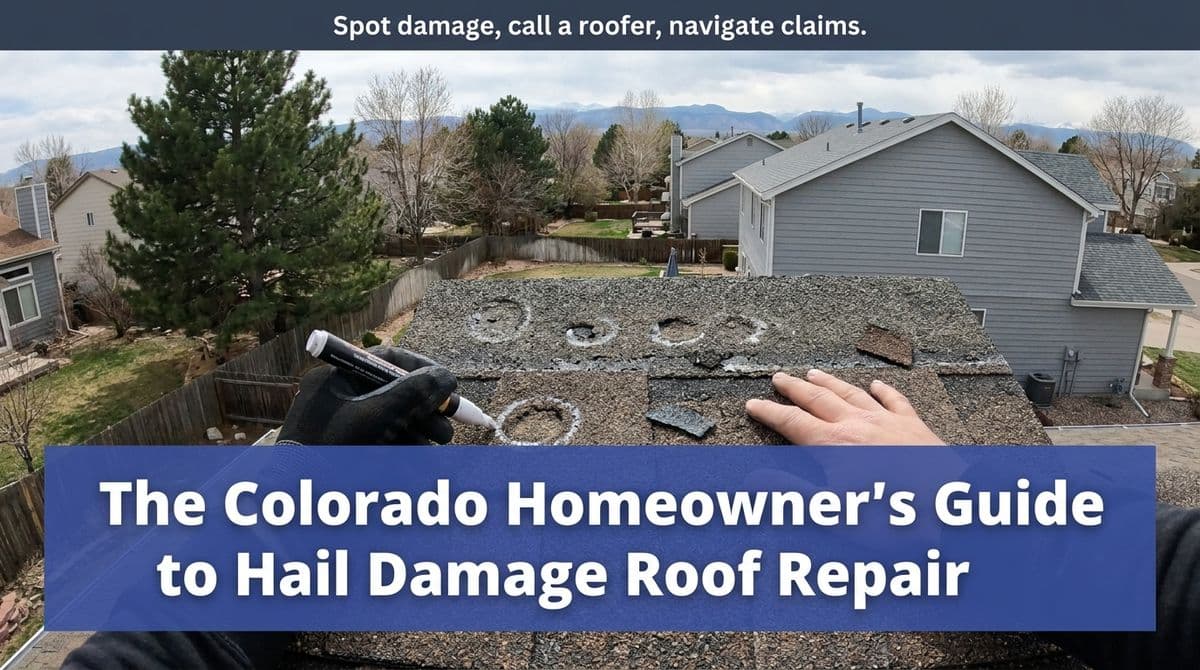
Colorado storms can move in fast — and hail damage isn’t always easy to spot from the ground.
At Colorado Front Range Roofing, we regularly help homeowners throughout Pueblo and Colorado Springs inspect roofs after severe weather and navigate the insurance process with confidence.
If your home was recently hit by hail, here’s what you should know about spotting damage, understanding insurance claims, and protecting your roof before small issues turn into major repairs.
How Hail Damages a Roof
Different roofing materials react differently during a hailstorm, but almost every roof system can suffer damage under the right conditions.
Asphalt Shingles
Hail can knock protective granules off shingles, leaving behind:
Dark bruised spots
Bald patches
Cracks
Soft impact areas
Once shingles lose their protective surface, sunlight and moisture can speed up deterioration and eventually lead to leaks.
Metal Roofing
Metal roofs are durable, but hail can still cause:
Dents
Coating damage
Loosened fasteners
Cosmetic imperfections
In more severe storms, impacts can compromise seams or flashing components.
Tile Roofing
Concrete and clay tiles may:
Crack
Chip
Break along edges or ridges
Sometimes the underlayment beneath the tile also suffers hidden damage during hailstorms.
Signs of Hail Damage You Can Spot From the Ground
You should never climb onto your roof after a storm unless it’s safe and you’re experienced.
However, there are several warning signs homeowners can safely look for from ground level.
Check Gutters and Downspouts
Look for:
Fresh dents
Paint chipping
Granule buildup near downspouts
If soft metals are dented, there’s a good chance the roof was impacted too.
Inspect Siding and Exterior Surfaces
Hail may leave marks on:
Siding
Window trim
Garage doors
Fence staining
Deck surfaces
These clues help identify the severity and direction of the storm.
Look Around the Yard
You may notice:
Pieces of shingles
Broken tile fragments
Heavy granule shedding
Damaged plants or patio furniture
Even if the roof looks “fine” from below, these signs often indicate hidden roof damage.
When You Should Call a Roofing Professional
After a hailstorm, it’s smart to schedule an inspection if:
Hail was quarter-sized or larger
Neighbors are filing roof claims
You notice dents or missing shingles
Water stains appear inside the home
Granules are collecting heavily in gutters
At Colorado Front Range Roofing, we perform detailed inspections designed specifically for Colorado storm damage conditions.
What Happens During a Hail Damage Inspection
A professional inspection involves much more than a quick glance at the roof.
During a typical inspection, we check:
Shingles for bruising or cracking
Flashing and vents for impact damage
Gutters and soft metals for dents
Roof decking for soft spots
Attic spaces for moisture or leaks
Siding and exterior components for storm-related damage
We also document everything with photos and notes to help homeowners understand the condition of their roof clearly.
Understanding Insurance Claims for Hail Damage
Many Colorado homeowners’ insurance policies cover hail damage, but timing and documentation matter.
Important Steps After a Storm
Take photos of visible damage
Record the storm date if possible
Schedule a professional inspection quickly
Review your deductible and policy details
Keep copies of inspection reports and receipts
Waiting too long to file a claim can sometimes complicate the process.
Why Local Roofing Companies Matter
After major hailstorms, neighborhoods often see an influx of “storm chasers” — out-of-state roofing crews going door to door.
Before hiring anyone, homeowners should:
Verify local licensing and insurance
Check Colorado reviews and references
Avoid high-pressure sales tactics
Read contracts carefully before signing
Working with a trusted local roofing contractor helps ensure better communication, accountability, and long-term support.
What Colorado Homeowners Should Do After a Hailstorm
Here’s a simple checklist to follow after severe weather:
Inspect your property safely from the ground
Look for dents, granules, and visible damage
Document anything unusual with photos
Schedule a professional roof inspection
Review your insurance policy and deductible
Address repairs before the next major storm season
Colorado hailstorms are unpredictable, but catching roof damage early can help prevent leaks, structural problems, and expensive repairs later on.
If you’re unsure whether your roof suffered hail damage, the team at Colorado Front Range Roofing can help you evaluate your roof and understand your options clearly.
For inspections or questions after a storm, contact us here: