Commercial Roof Drainage & Ponding
Learn about the importance of commercial roof drainage, risks of ponding water, and solutions to prevent roof damage. Protect your building with expert insight.
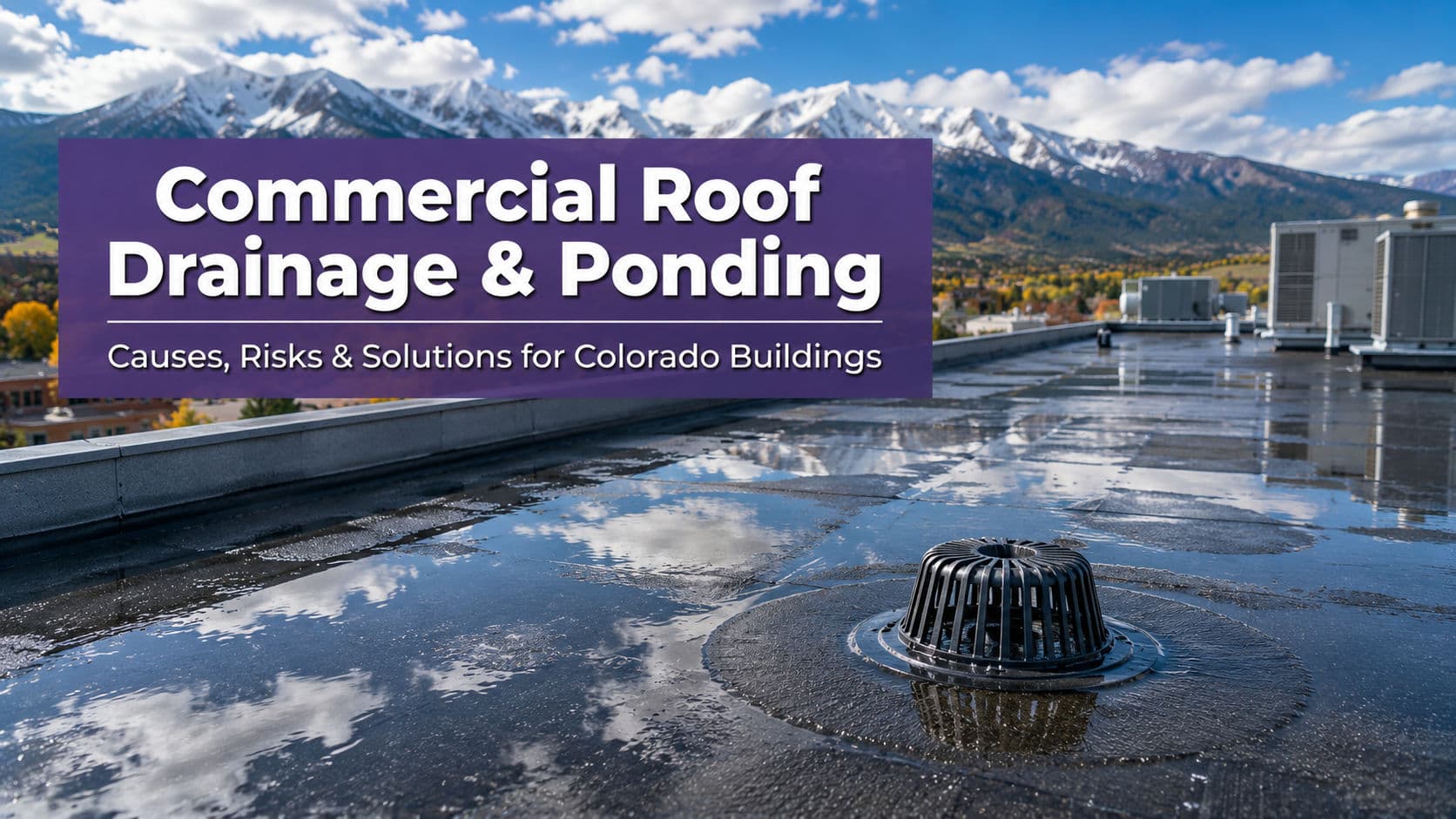
Why Roof Drainage Matters on Commercial Buildings
When it comes to commercial roofing, drainage is one of the most important — and most overlooked — parts of the entire roofing system.
Unlike many residential roofs, commercial roofs are often:
Flat
Low-slope
Large surface areas
More vulnerable to standing water
If water cannot properly drain off the roof, it may begin to collect in low areas, creating what’s known as ponding water.
Over time, poor drainage and ponding can lead to serious roofing problems, including:
Leaks
Membrane deterioration
Structural stress
Mold growth
Premature roof failure
In Colorado, where commercial roofs experience snow, hail, freeze-thaw cycles, and sudden storms, proper drainage becomes even more critical.
What Is Roof Ponding?
Roof ponding occurs when water remains on the roof surface for an extended period after rainfall or snowmelt.
Most roofing professionals consider standing water that remains longer than 48 hours to be ponding.
While a small amount of temporary water may be normal on some flat roofs, prolonged ponding usually indicates a drainage problem.
Why Ponding Water Is Dangerous
Many property owners assume standing water is only a cosmetic issue.
In reality, ponding water can create significant long-term damage.
Added Structural Weight
Water is extremely heavy.
Even shallow ponding areas can place substantial stress on:
Roof decking
Structural supports
Insulation systems
Roofing membranes
Over time, repeated water accumulation may contribute to sagging or structural deterioration.
Ponding Accelerates Roof Deterioration
Standing water can break down commercial roofing materials much faster than normal weather exposure.
Depending on the roofing system, ponding may contribute to:
Membrane deterioration
Seam separation
Blistering
Surface cracking
Coating failure
Constant moisture exposure weakens roofing systems over time, especially when combined with Colorado’s freeze-thaw cycles.
Freeze-Thaw Cycles Make Ponding Worse in Colorado
Colorado weather creates unique challenges for commercial roofs.
When standing water freezes and thaws repeatedly, it can expand small roofing weaknesses into larger problems.
Freeze-thaw cycles may cause:
Cracking
Seam stress
Membrane separation
Flashing damage
Water infiltration
What begins as minor ponding can eventually turn into major leak issues.
Common Causes of Commercial Roof Ponding
Several factors may contribute to poor roof drainage.
Improper Roof Slope
Even flat roofs require slight slope design to move water toward drains or scuppers.
Poor design or settling may create low spots where water collects.
Clogged Roof Drains
Commercial roof drains can become blocked by:
Leaves
Dirt
Debris
Ice
Roofing materials
Blocked drainage systems are one of the most common causes of ponding.
Compressed Insulation
Over time, insulation beneath the membrane may compress or shift, creating uneven roof surfaces.
Structural Movement
Large commercial buildings naturally shift and settle over time, which may alter drainage patterns.
Poor Installation
Improper installation of drainage systems, insulation, or roofing membranes can contribute to long-term water accumulation.
Signs Your Commercial Roof May Have Drainage Problems
Property owners should watch for warning signs such as:
Standing water after storms
Water stains on ceilings
Sagging roof areas
Visible algae or vegetation growth
Membrane discoloration
Interior leaks
Drains overflowing during rain
Bubbling or blistering roofing materials
Even small drainage issues can become expensive repairs if ignored.
Types of Commercial Roof Drainage Systems
Commercial buildings may use several drainage methods depending on roof design.
Interior Roof Drains
Common on large flat roofs, these drains move water through internal piping systems.
Scuppers
Scuppers allow water to exit through openings along roof edges or parapet walls.
Gutters & Downspouts
Some low-slope commercial roofs use oversized gutter systems to direct water away from the building.
Tapered Insulation Systems
Tapered insulation creates subtle roof slope that encourages water movement toward drainage points.
Regular Roof Maintenance Helps Prevent Ponding
Routine maintenance plays a major role in preventing drainage problems.
Commercial roof maintenance often includes:
Clearing debris from drains
Inspecting drainage flow
Checking membrane condition
Identifying low spots
Evaluating flashing and seams
Monitoring roof penetrations
Many drainage problems can be corrected early before major structural damage develops.
Ponding Water Can Impact Roof Warranties
Some commercial roofing warranties contain limitations regarding standing water.
Excessive ponding may:
Void portions of a warranty
Accelerate membrane failure
Create disputes during claims
That’s why addressing drainage concerns early is important for protecting both the roof and warranty coverage.
Can Ponding Problems Be Fixed?
In many cases, yes.
Solutions may include:
Clearing blocked drains
Adding tapered insulation
Improving roof slope
Installing additional drainage points
Repairing structural low spots
Recoating damaged roof areas
The right solution depends on the severity and cause of the drainage issue.
Drainage Is Critical for Long-Term Commercial Roof Performance
A commercial roof is designed to protect a major investment — but even high-quality roofing systems can fail early if water cannot drain properly.
Proper drainage helps:
Prevent leaks
Extend roof lifespan
Reduce structural stress
Protect insulation systems
Improve overall roof performance
If your commercial roof has standing water, drainage concerns, or recurring leaks, Colorado Front Range Roofing can inspect the system, identify problem areas, and recommend solutions to help protect your building long term.