Roofing Underlayment Guide
Explore everything about roofing underlayment, its types, benefits, and its role in protecting your home from severe weather conditions.
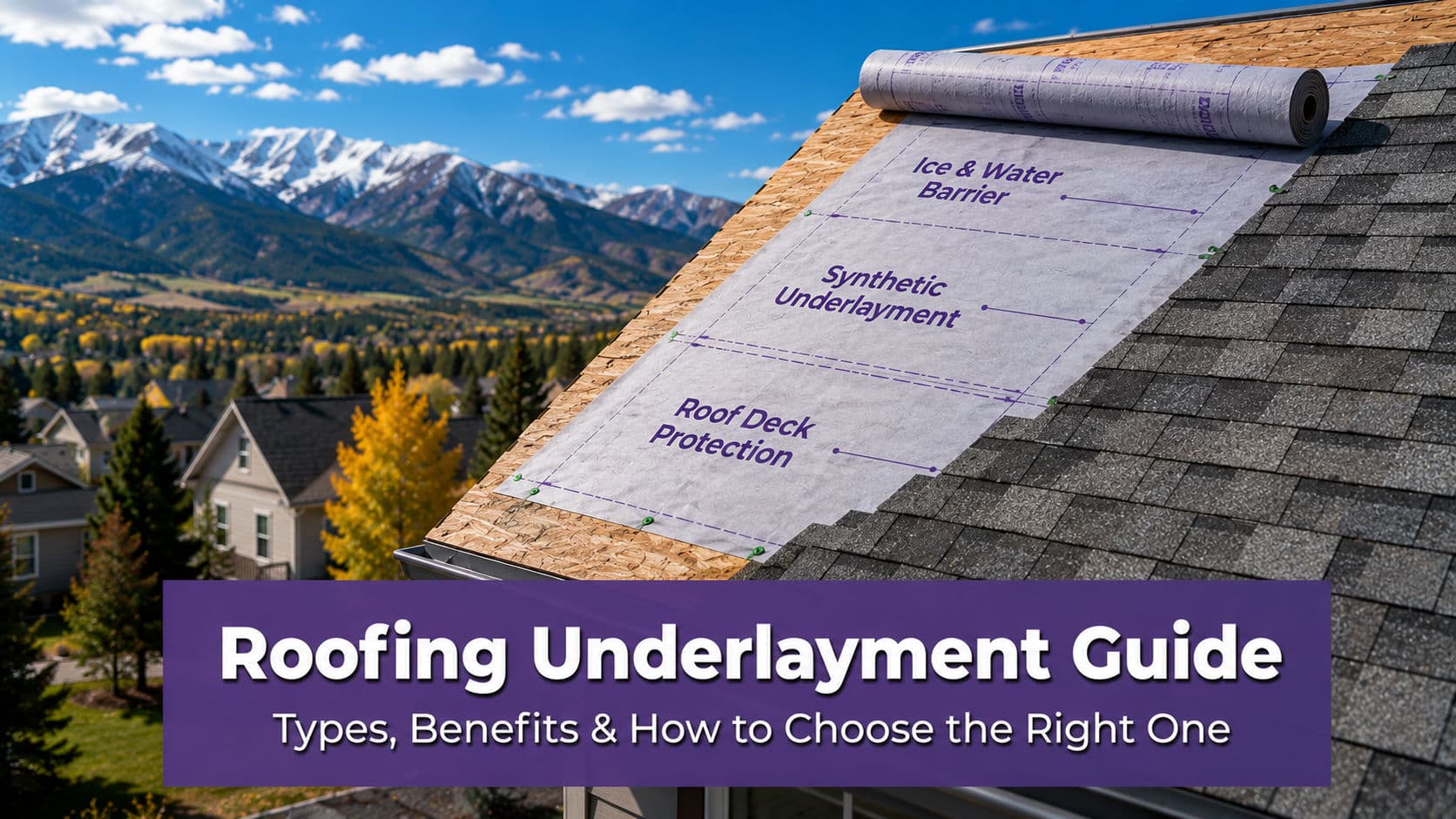
What Is Roofing Underlayment?
Most homeowners focus on shingles when thinking about a roof, but one of the most important parts of the roofing system is actually hidden underneath them.
Roofing underlayment is the protective layer installed between the roof decking and the exterior roofing material.
It serves as a secondary moisture barrier that helps protect the home from:
Water intrusion
Wind-driven rain
Ice dams
Snow melt
Condensation
In Colorado, underlayment plays a critical role because roofs are constantly exposed to severe weather conditions.
Why Roofing Underlayment Matters in Colorado
Colorado roofs face unique environmental challenges, including:
Hailstorms
Heavy snow
Freeze-thaw cycles
High winds
Intense UV exposure
Rapid temperature swings
If shingles become damaged during a storm, the underlayment often becomes the temporary barrier protecting the home from leaks.
A quality underlayment system can help reduce the risk of:
Moisture damage
Rotting decking
Interior leaks
Mold growth
Premature roof failure
The Main Types of Roofing Underlayment
There are several common types of underlayment used in residential roofing systems.
Each offers different levels of durability, water resistance, and performance.
Asphalt-Saturated Felt Underlayment
Often called “felt paper” or “tar paper,” this is one of the oldest roofing underlayment materials still used today.
Advantages of Felt Underlayment
More affordable upfront
Widely available
Familiar to many contractors
Provides basic moisture protection
Potential Drawbacks
Heavier material
Tears more easily
Can absorb moisture
Less durable during installation exposure
May wrinkle when wet
While still used on some projects, many modern roofing systems now use synthetic underlayment instead.
Synthetic Roofing Underlayment
Synthetic underlayment has become increasingly popular because of its durability and weather resistance.
These products are typically made from engineered polymers designed for roofing applications.
Advantages of Synthetic Underlayment
Lightweight material
Strong tear resistance
Better moisture protection
Improved durability during installation
Better UV resistance during temporary exposure
Often safer for installers to walk on
Why Many Colorado Roofers Prefer Synthetic Materials
Because Colorado weather can change quickly, synthetic underlayment often performs better during:
High winds
Sudden rainstorms
Snow exposure
Temperature swings
Many homeowners also choose synthetic systems for their improved long-term durability.
Ice & Water Shield: Extra Protection in Vulnerable Areas
Ice and water shield is a specialized waterproof membrane used in areas more vulnerable to leaks.
Unlike standard underlayment, this material seals more tightly around nails and fasteners.
Common Areas Where Ice & Water Shield Is Installed
Roof eaves
Valleys
Around chimneys
Skylights
Roof penetrations
Low-slope sections
Why It Matters in Colorado
Colorado’s freeze-thaw cycles create ideal conditions for:
Ice dams
Snow melt backup
Water intrusion
Ice and water shield provides an additional layer of protection in these higher-risk areas.
Underlayment Is Not All Installed the Same Way
Even high-quality underlayment can fail if installed improperly.
Installation mistakes may include:
Incorrect overlap
Improper fastening
Poor sealing around penetrations
Wrinkled installation
Inadequate coverage
Proper installation becomes especially important during Colorado windstorms, where poorly secured materials may become vulnerable to uplift.
Roofing Material Affects Underlayment Choices
Different roofing systems may require different underlayment types.
Asphalt Shingles
Often paired with synthetic or felt underlayment.
Metal Roofing
May require high-temperature underlayment depending on the system design.
Tile Roofing
Sometimes uses heavier-duty underlayment systems because of the roof weight and lifespan expectations.
Low-Slope Roofs
May require specialized waterproof membranes for added protection.
The best underlayment depends on both the roofing material and local climate conditions.
Underlayment Helps Protect During Storm Damage
After severe hail or wind storms, shingles may become compromised before leaks appear inside the home.
In many cases, underlayment becomes the temporary defense layer protecting the roof decking from moisture intrusion.
A stronger underlayment system can sometimes help reduce immediate leak risks after storm events.
Can Old Underlayment Be Reused?
In most full roof replacements, old underlayment is removed and replaced.
Reusing older materials is generally not recommended because hidden wear or moisture damage may already exist beneath the surface.
A new roof system performs best when all protective layers work together properly.
Questions to Ask About Roofing Underlayment
Before starting a roofing project, homeowners should ask:
What type of underlayment is being installed?
Is synthetic underlayment included?
Where will ice and water shield be applied?
Does the system meet local code requirements?
Is the underlayment compatible with the roofing material?
How long can the underlayment remain exposed if weather delays occur?
These details can have a major impact on long-term roof performance.
A Roof Is More Than Just Shingles
While shingles get most of the attention, roofing underlayment plays a huge role in protecting homes from Colorado’s harsh weather conditions.
A properly installed underlayment system can help:
Prevent leaks
Protect roof decking
Improve storm resistance
Reduce moisture problems
Extend roof lifespan
If you’re planning a roof replacement or have questions about your current roofing system, Colorado Front Range Roofing can help explain your options and recommend the best underlayment solution for your home.