Drone Roof Inspections in Pueblo: How They Work & When to Use Them
Curious about drone roof inspections in Pueblo? Learn how they work, when they’re best, and what to expect, including thermal imaging and FAA safety rules.
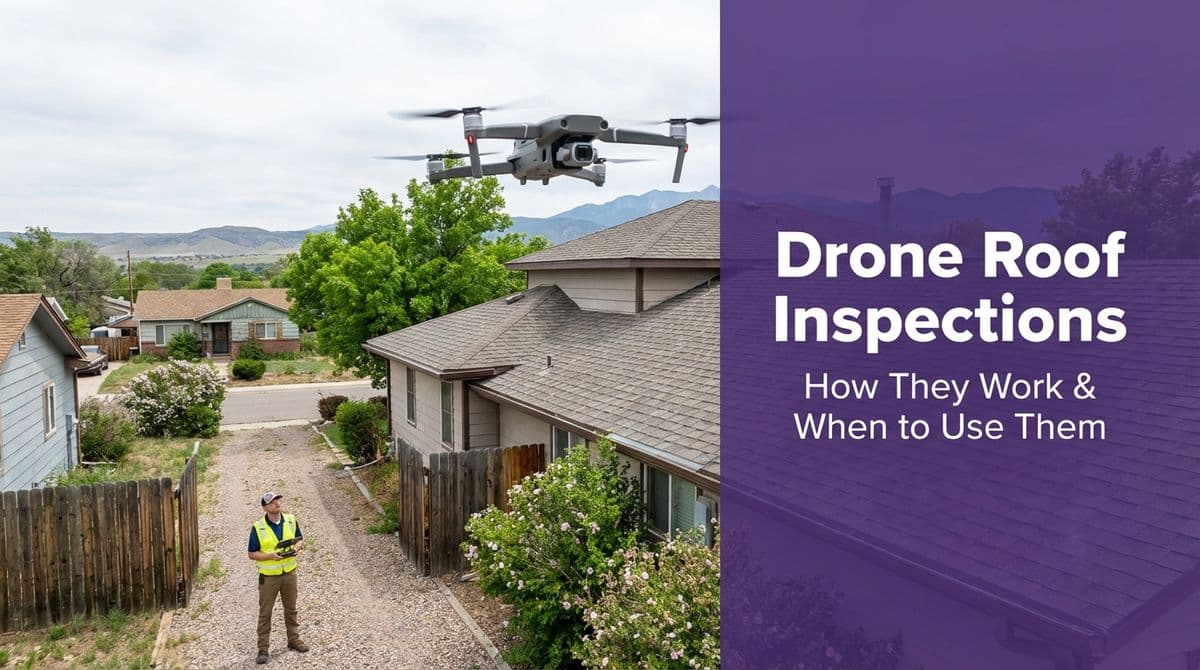
We Got a Call About “Those Roof Drones”…
We recently got a call from a homeowner — let’s call him Mark — who had just gone through a nasty windstorm on the north side of Pueblo.
He told us:
“I keep seeing videos of roofers using drones. Is that just a gimmick, or is that something I should actually ask for?”
Mark’s roof was fairly steep, and some of his shingles were already aging. He was nervous about anyone walking on it and worried about hidden damage he couldn’t see from the ground.
That made it the perfect situation to talk about drone roof inspections — what they are, how accurate they really are, and when they make the most sense here in Pueblo.
What Is a Drone Roof Inspection, Really?
A drone roof inspection is exactly what it sounds like: we use a small, camera-equipped drone to capture high-resolution photos and video of your entire roof — often without needing to walk on it.
But it’s not just flying a toy over your house.
A professional drone inspection includes:
High-resolution (often 4K) imaging to zoom in on shingles, flashing, vents, and penetrations
Stabilized, grid-style flight paths to systematically scan every section
Software that helps measure slopes, valleys, and roof dimensions
The goal is the same as any inspection: identify damage, spot potential problems, and document everything clearly.
Why Roofers Are Switching to Drones in 2026
Mark asked, “Is this actually how you guys work now?”
The answer: yes.
In 2026, drones are no longer a novelty — they’re becoming a standard tool, especially in places like Pueblo where we deal with hail, wind, and intense sun.
Roofers are adopting drones because they allow us to:
Work faster (many inspections done in under 30 minutes)
Reduce risk on steep or fragile roofs
Capture detailed photo documentation for homeowners and insurance
For contractors, it’s about efficiency and safety. For homeowners, it means quicker answers and better visibility into what’s actually happening on your roof.
Drones vs. Traditional Roof Inspections
We explained to Mark that it’s not really “one or the other” — it’s about using the right tool for the situation.
Where Drones Excel
Accessing steep, high, or complex roofs safely
Reducing foot traffic on aging or brittle materials
Providing a full bird’s-eye view of the entire roof
Capturing clear, shareable documentation
Where Traditional Inspections Still Matter
Feeling soft spots or structural weakness
Checking certain flashing or sealant details up close
Verifying problem areas physically
In many cases, the best approach is a hybrid inspection — starting with the drone, then following up hands-on only where needed.
Are Drone Roof Inspections Accurate Enough?
Mark’s biggest concern was accuracy:
“Can you actually see the small stuff?”
With the right equipment and experience — yes.
Modern drone inspections can reliably identify:
Hail impact marks
Missing or lifted shingles
Cracked or slipped tiles
Damaged flashing
Debris buildup in valleys
High-resolution zoom allows us to get extremely close without stepping on the roof. We can also pause, compare sections side-by-side, and document everything clearly.
That said, drones don’t completely replace physical inspections — they make them more targeted and efficient.
Safety and Legal Requirements (FAA Rules)
Mark also asked, “Do you need a license for that?”
Yes — and this part matters more than most homeowners realize.
Drone inspections are regulated under FAA Part 107, which means:
The operator must hold a Remote Pilot Certificate
The drone must remain within visual line of sight
Airspace restrictions must be followed (especially near airports)
Pre-flight safety checks are required
For you, this means working with someone who operates legally, safely, and professionally — not just someone flying a drone as a side tool.
When a Drone Inspection Makes the Most Sense in Pueblo
For Mark, the decision came down to safety and roof condition.
In Pueblo, drone inspections are especially useful for:
Steep or multi-story roofs
Older or fragile shingles that could be damaged by foot traffic
Post-storm inspections after hail or high winds
Insurance documentation where clear visuals matter
On simple, walkable roofs, we may still inspect traditionally — but drones are often the safest and fastest starting point.
What You Can Expect During a Drone Inspection
Mark’s final question was:
“Do I need to do anything before you show up?”
Not much. Here’s how the process typically works:
Quick walkthrough to understand your concerns
Property check for obstacles like trees or power lines
Pre-flight setup and safety checks
Systematic flight capturing all roof areas
Focused passes on problem spots
Review of images and findings with you
You stay on the ground the entire time — and you can even watch the inspection happen in real time.
Beyond the Naked Eye: Thermal Imaging
One of the most powerful upgrades to drone inspections is thermal imaging.
This allows us to see temperature differences across your roof — something the human eye can’t detect.
Thermal imaging can help identify:
Hidden moisture beneath shingles
Areas of trapped heat or poor insulation
Early signs of leaks
Ventilation imbalances
This is especially useful for ongoing leaks, flat roofs, or situations where everything looks fine — but something still isn’t right.
The Bigger Picture: Drones Are Changing Roofing
Drones aren’t just a cool tool — they’re part of a bigger shift in how roofing is done.
They allow contractors to:
Work more efficiently
Reduce risk
Improve accuracy
Provide better documentation
But they also require:
Proper training and certification
Investment in equipment and software
Adjustments to inspection workflows
In other words, they’re raising the standard for what a professional inspection should look like.
Is a Drone Roof Inspection Right for Your Pueblo Home?
By the end of our conversation, Mark decided a drone inspection was the safest and smartest way to evaluate his roof.
He got:
Clear, detailed images
A better understanding of his roof’s condition
A plan for next steps — without unnecessary risk
If you’re in Pueblo and unsure about your roof — especially after a storm or on a steep or aging structure — a drone inspection is a smart place to start.
Whether we use a drone, a ladder, or both, the goal is simple:
Give you a clear, honest assessment so you can protect your home with confidence.