What Is a Dimensional (Architectural or laminated shingles) Shingle?
Dimensional shingles, or architectural shingles, offer durability and a three-dimensional appearance, excelling over traditional 3-tab shingles.
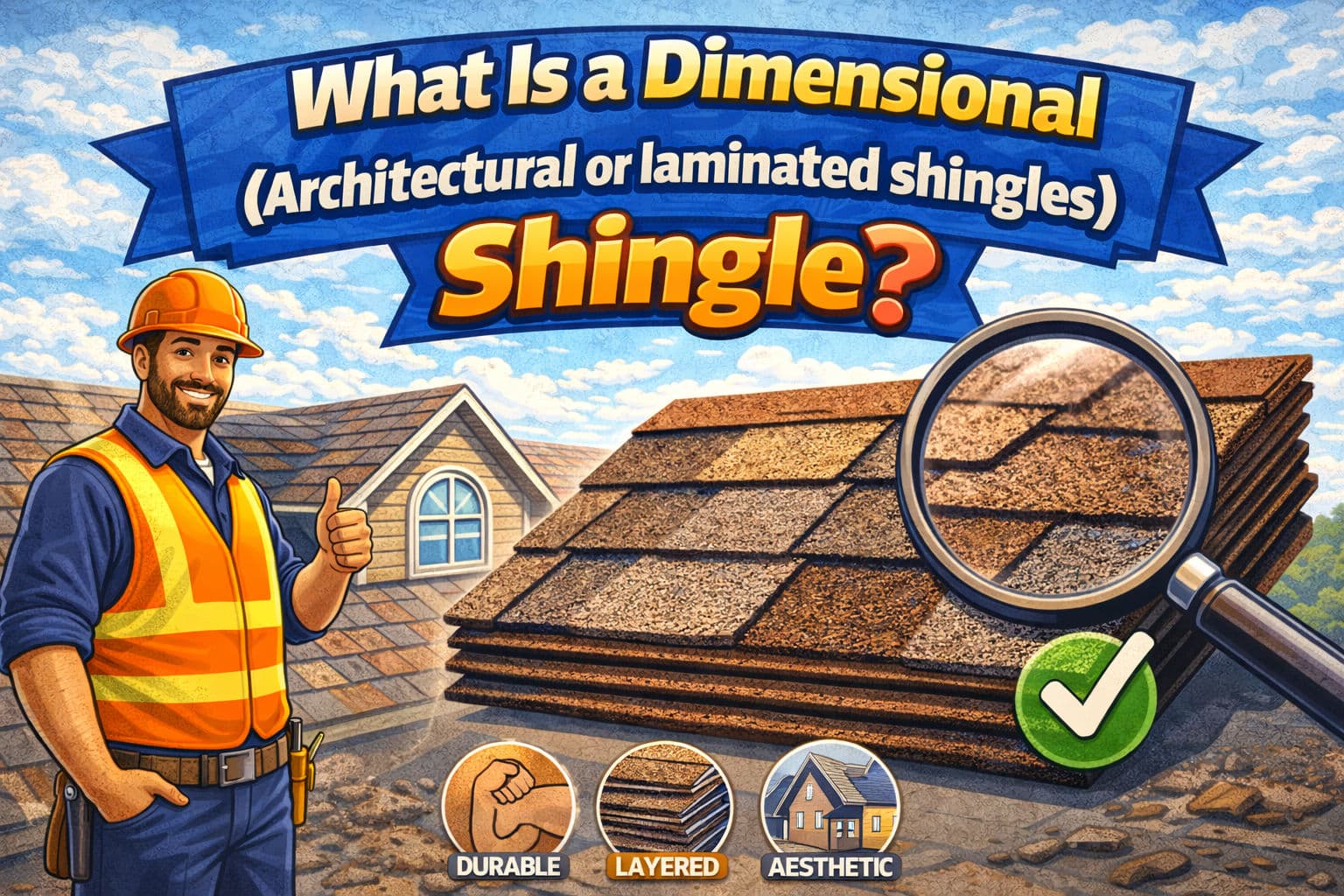
A dimensional shingle—also known as an architectural or laminate shingle—is a premium asphalt roofing product made from multiple fused layers. This laminated construction creates a thicker, high-profile, three-dimensional appearance that closely mimics the look of wood shake or slate while providing greater strength and performance than traditional flat 3-tab shingles.
Key Characteristics
Constructed from multiple asphalt and fiberglass layers laminated together, rather than a single flat layer like 3-tab shingles
Designed with varied shapes and shadow lines to add depth, texture, and curb appeal, especially on visible street-facing roof slopes
Marketed under names such as architectural, dimensional, or laminate—all referring to the same shingle category
Durability and Lifespan
Dimensional shingles are engineered for long-term performance and significantly outperform standard 3-tab shingles in most environments.
Typical service life: Approximately 30–50 years under average to good conditions, compared to 15–25 years for basic 3-tab shingles
Warranties: Commonly backed by 30-year to “lifetime” limited warranties, while 3-tab shingles typically carry 20–25-year warranties
Wind resistance: Multi-layer construction improves holding power, with many architectural shingles rated for 110–130 mph winds versus roughly 60–70 mph for many 3-tab products
Local example: On a Pueblo-area home with proper installation and ventilation, a quality dimensional shingle roof can realistically last several decades—even with strong sun exposure, hail risk, and seasonal winds. A 3-tab roof under the same conditions would likely require replacement much sooner.
Performance Advantages
Wind resistance: Heavier, thicker shingles adhere more securely and resist lifting, making them well-suited for open or windy neighborhoods
Temperature stability: Added thickness better accommodates expansion and contraction from temperature swings, reducing cracking and premature granule loss
Water resistance: Layered design and stronger adhesive seals improve protection against wind-driven rain when installed over proper underlayment
Aesthetics: The dimensional appearance increases perceived home quality and is standard on many mid- to high-end residential properties
Cost vs. Long-Term Value
Upfront cost: Architectural shingles typically cost 25–50% more than 3-tab shingles, depending on brand, roof complexity, and local labor rates
Installed price range: Commonly around $4.00–$8.50 per square foot, or roughly $8,000–$17,000 for a 2,000 sq ft roof, with premium systems costing more
Value over time: Because dimensional shingles often last nearly twice as long and require fewer repairs, their annualized “cost per year of service” is frequently equal to—or lower than—budget shingles
Resale impact: Upgrading from basic shingles to architectural shingles can improve curb appeal and may increase home value by several percentage points, with some estimates around 6–7%
Quick Comparison
Feature 3-Tab Asphalt Shingles Dimensional / Architectural Shingles
Typical lifespan 15–25 years 30–50 years
Wind rating ~60–70 mph 110–130 mph
Warranty 20–25 years limited 30-year to lifetime limited
Installed cost Lower upfront 25–50% higher upfront
Appearance Flat, uniform Thick, high-profile, shake-like
Long-term value Lower Strong
For Pueblo specifically: Intense sun exposure, hail risk, and periodic high winds make the added durability and performance of dimensional shingles especially valuable compared to entry-level 3-tab products.
Maintenance Requirements
While dimensional shingles are lower maintenance than lighter shingles, routine care is still essential to maximize lifespan:
Bi - Annual and post-storm inspections for lifted shingles, exposed fasteners, granule loss, and flashing damage
Keep gutters and roof valleys clear to prevent water backup at shingle edges
Maintain proper attic ventilation and insulation to reduce heat buildup and protect warranty coverage
Address minor issues promptly—such as resealing flashings or replacing damaged shingles—to prevent leaks and deck damage