How To Maintain a Tile Roof
Boost your home's appeal with a tile roof. Learn maintenance tips for clay and concrete tiles to ensure durability and energy efficiency.
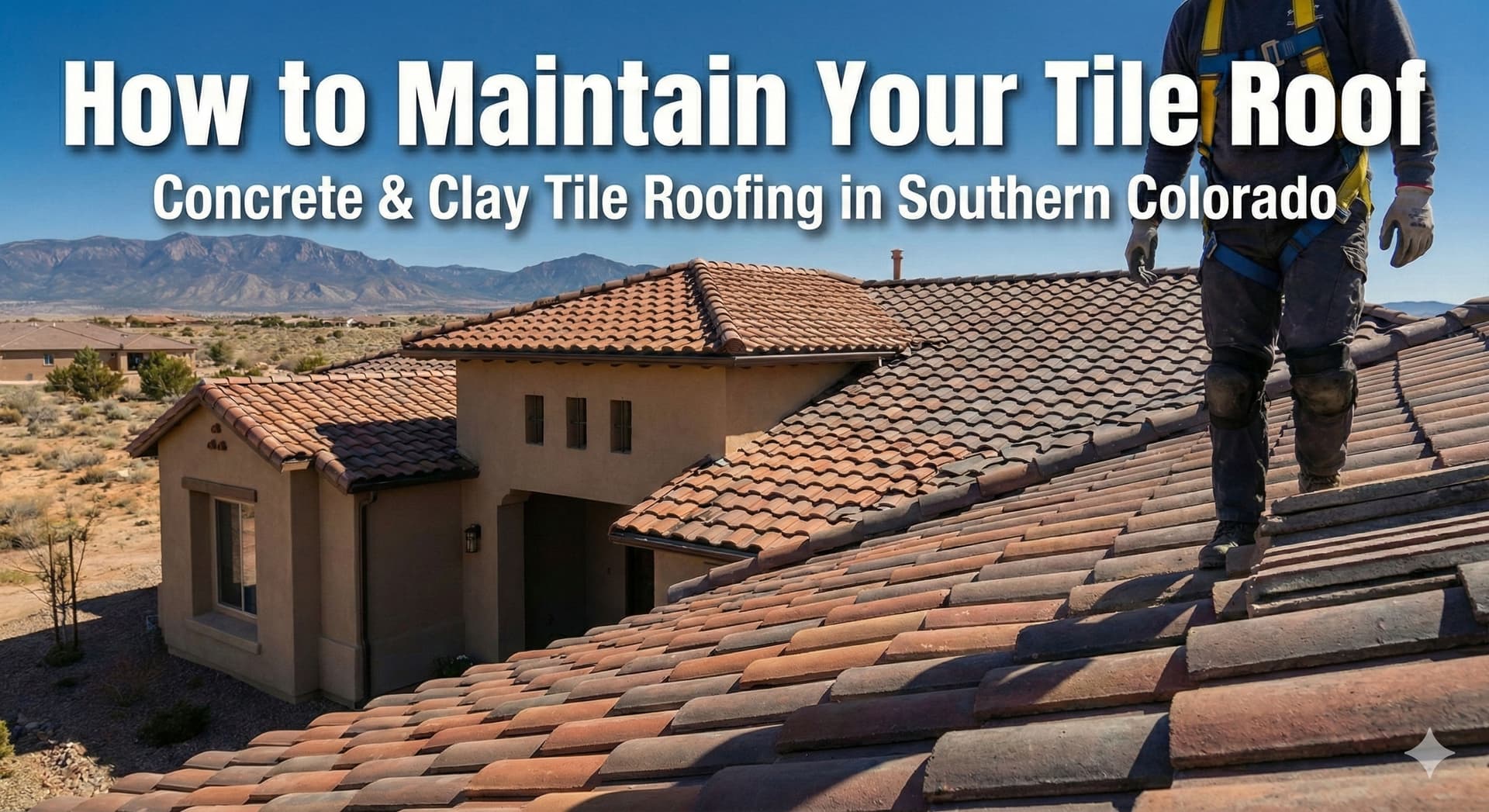
Concrete & Clay Tile Roofing in Southern Colorado
If you want to boost your home’s curb appeal, don’t overlook the roof. Whether you’re planning a major renovation or upgrading an aging system, few materials transform a home like a concrete or clay tile roof.
At Colorado Front Range Roofing, we recommend tile roofing for homeowners who want longevity, energy efficiency, and architectural character. With proper maintenance, a tile roof can last 50–100+ years, making it one of the most durable and cost-effective roofing systems available in Southern Colorado.
Why Choose Concrete or Clay Tile Roofing?
Longevity
Concrete tile roofs are engineered to last 50+ years, and clay tiles can exceed 100 years with proper care. While other roofing materials need full replacement multiple times over a home’s life, tile is often a once-in-a-generation investment.
Durability
Tile roofs perform exceptionally well against:
Hail
Snow loads
High winds
Intense UV exposure
Unlike asphalt, tile doesn’t rot, curl, or degrade rapidly under temperature swings.
Fire Resistance
Tile roofing is Class A fire-rated, the highest rating available—an important advantage in wildfire-prone regions and often a factor in insurance savings.
Energy Efficiency
Tile creates a natural thermal barrier. Air circulates beneath the tiles, reducing attic heat in summer and heat loss in winter—lowering HVAC strain and energy bills.
Curb Appeal
From Spanish and Mediterranean to modern and Southwestern styles, tile roofs add depth, texture, and long-term visual value unmatched by shingles.
Tile Roof Maintenance: What Homeowners Need to Know
Tile roofs are low-maintenance, but they are not maintenance-free. The tiles themselves are extremely durable, but the roofing system relies on underlayment, flashing, and accessories that require monitoring.
1. Schedule Regular Inspections
Have your tile roof professionally inspected:
Once per year
After major hail, wind, or snow events
Inspections check for:
Cracked or displaced tiles
Worn underlayment
Flashing issues at chimneys, skylights, and valleys
Ridge and hip cap integrity
⚠️ Improper foot traffic is the leading cause of tile damage—always use a tile-experienced contractor.
2. Keep Valleys, Eaves, and Gutters Clear
Debris buildup is a common cause of tile roof leaks.
Remove leaves, pine needles, and dust
Keep valleys and gutters flowing freely
Prevent moisture dams that force water beneath tiles
This is especially important in windy or tree-dense areas like Monument, Woodland Park, and Trinidad.
3. Stay Off the Roof (The Golden Rule)
Concrete and clay tiles resist hail but are brittle under direct foot pressure.
Walking on tiles can cause hairline cracks that aren’t visible from the ground
Cracks allow water to reach the underlayment
Professionals use walking boards, ladders, or drones to avoid damage.
4. Monitor the Underlayment (Critical)
The underlayment is the true waterproof barrier beneath tile.
Typical lifespan: 20–30 years
Warning signs: interior leaks, brittle felt, black paper in gutters
A Tile R&R (Remove & Reset) allows tiles to be reused while replacing the underlayment—restoring full protection without replacing the roof.
5. Inspect Flashing & Penetrations
Metal components often fail before tile does.
Check:
Chimney flashing
Vent pipe boots
Skylight curbs
Valley metal
Loose or corroded flashing is one of the most common sources of tile roof leaks.
6. Bird Stops & Wildlife Protection
Bird stops seal the gap at the eaves created by curved tiles.
Prevent birds and rodents from nesting
Protect drainage paths
Reduce underlayment deterioration from acidic droppings
7. Moss & Efflorescence
Efflorescence (white powder) is normal on concrete tile and cosmetic only
Moss or algae should be treated with low-pressure methods—never pressure wash
Tile Roofing vs. Asphalt Shingles
Feature Tile Roofing Asphalt Shingles
Lifespan 50–100+ years 15–30 years
Fire Rating Class A Class B–C
Energy Efficiency Excellent Moderate
Weight Heavy (800–1,200 lbs/sq) Light (250–300 lbs/sq)
Cost Higher upfront Lower upfront
Tile costs more initially but delivers lower lifetime cost, better performance, and higher resale value.
Do Tile Roofs Leak?
Rarely due to the tile itself. Leaks typically come from:
Aged underlayment
Improper installation
Broken or slipped tiles
Flashing failure
DIY repairs often cause additional damage—tile systems require specialized expertise.
How Long Do Tile Roofs Last?
Concrete tile: 50–75+ years
Clay tile: 75–100+ years
Many historic European buildings still use original clay tiles centuries later. Proper maintenance makes the difference between a 20-year failure and a 100-year success.
Professional Tile Roof Maintenance in Southern Colorado
Tile roofing is a long-term investment that should be serviced by specialists—not general roofers.
📞 Colorado Front Range Roofing
📍 Pueblo & Southern Colorado
📱 (719) 542-2330