Metal Roofing vs Asphalt Shingles: Which Is Better for Colorado Homes?
Explore metal roofing versus asphalt shingles for Colorado homes. Understand their durability, cost, and performance in Colorado's tough weather.
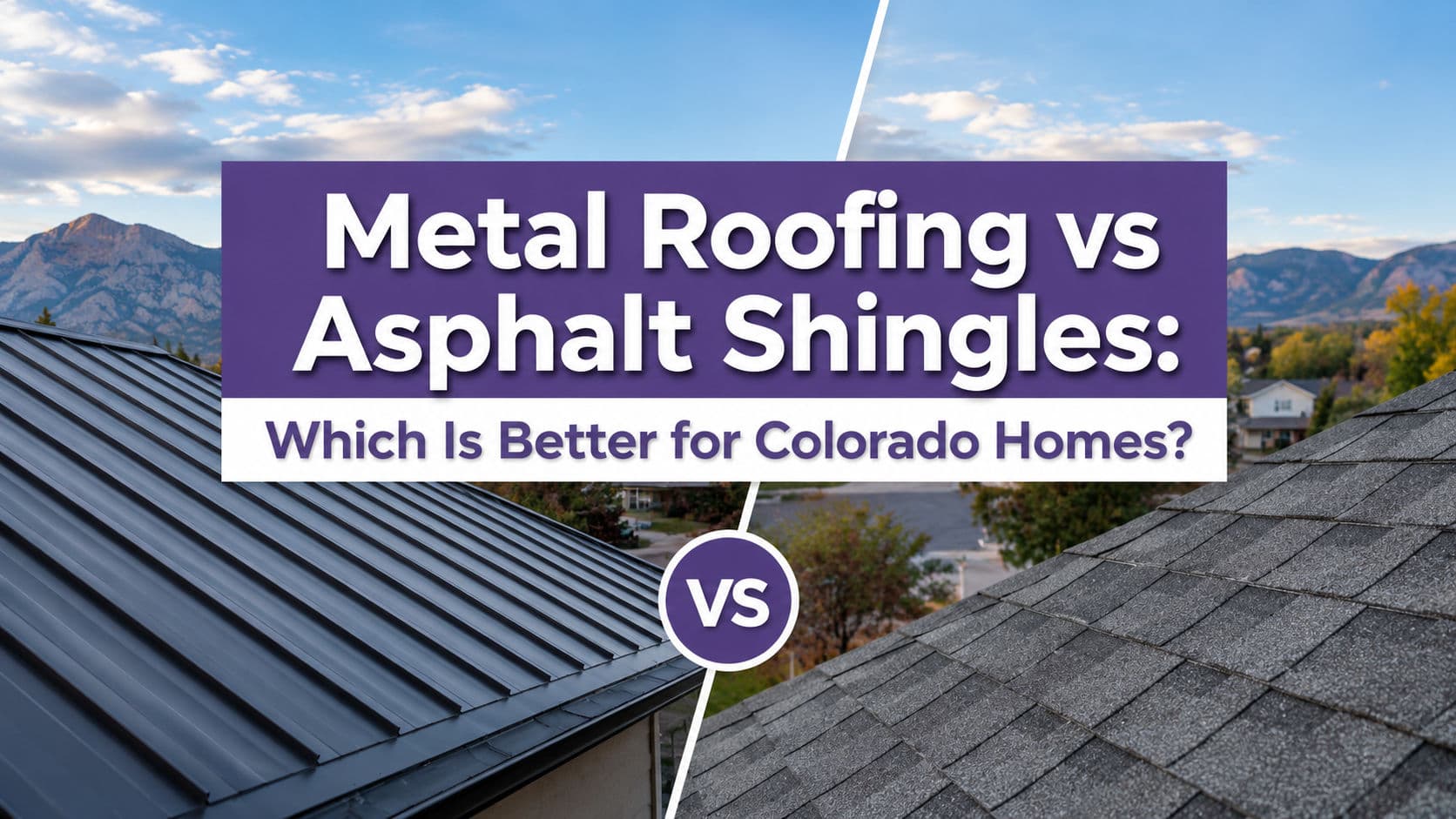
Choosing the Right Roof in Colorado
If you’re planning a roof replacement in Pueblo or anywhere along Colorado’s Front Range, one of the biggest decisions you’ll face is choosing between metal roofing and asphalt shingles.
Both options are popular for Colorado homes, but they perform very differently when it comes to hail, wind, snow, maintenance, lifespan, and overall cost.
The “better” option often depends on:
Your budget
Your long-term plans
Your home’s style
Storm exposure
Energy efficiency goals
Understanding the pros and cons of each roofing system can help you make a smarter investment for your property.
Why Roofing Material Matters More in Colorado
Colorado roofs deal with some of the harshest weather conditions in the country.
Homeowners regularly experience:
Hailstorms
High winds
Heavy snow
Intense UV exposure
Freeze-thaw cycles
Rapid temperature swings
Because of this, roofing materials that perform well in milder climates may wear down faster here.
That’s why many homeowners compare metal roofing and asphalt shingles so closely before making a final decision.
Asphalt Shingles: The Most Common Roofing Choice
Asphalt shingles remain the most widely used residential roofing material in Colorado because they’re affordable, versatile, and relatively quick to install.
Advantages of Asphalt Shingles
Lower Upfront Cost
Asphalt shingles typically cost significantly less than metal roofing upfront, making them appealing for homeowners working within a tighter budget.
Easier Repairs
If a section becomes damaged, repairs are often simpler and less expensive compared to some metal systems.
Variety of Styles & Colors
Modern shingles come in many styles, textures, and colors that fit a wide range of home designs.
Faster Installation
Most asphalt roof replacements can be completed quickly, helping reduce labor time and disruption.
Potential Downsides of Asphalt Shingles
Shorter Lifespan
In Colorado’s climate, asphalt roofs generally last around 15–30 years depending on:
Material quality
Installation quality
Storm exposure
Ventilation
Maintenance
More Vulnerable to Hail
Although impact-resistant shingles are available, traditional asphalt shingles can suffer significant damage during severe hailstorms.
Heat & UV Wear
Colorado’s high elevation means stronger UV exposure, which can cause shingles to age faster over time.
Metal Roofing: Growing in Popularity
Metal roofing has become increasingly popular across Colorado because of its durability and storm resistance.
Today’s metal roofs are available in several styles, including:
Standing seam panels
Stone-coated steel
Metal shingles
Corrugated systems
Advantages of Metal Roofing
Longer Lifespan
A properly installed metal roof can often last 40–70 years with minimal maintenance.
Excellent Wind Resistance
Many metal systems are designed to withstand strong Colorado wind events better than standard shingles.
Better Snow Shedding
Metal roofs allow snow to slide off more easily, helping reduce heavy snow buildup.
Improved Energy Efficiency
Metal roofing can reflect solar heat, which may help reduce cooling costs during hot Colorado summers.
Strong Hail Performance
Some metal roofing systems provide excellent resistance to hail impacts and severe weather.
Potential Downsides of Metal Roofing
Higher Initial Cost
Metal roofing usually costs substantially more upfront than asphalt shingles.
More Specialized Installation
Metal roofs require experienced installers. Poor installation can lead to leaks, oil canning, or expansion-related issues.
Cosmetic Denting
Although metal roofs are durable, some systems may still show dents after large hailstorms.
How Hail Impacts Each Roofing Type
Because hail is such a major concern in Colorado, many homeowners focus heavily on storm durability.
Asphalt Shingles During Hailstorms
Hail can cause:
Granule loss
Cracked shingles
Bruising
Water infiltration risks
Impact-resistant Class 4 shingles offer better protection than standard shingles and may qualify for insurance discounts.
Metal Roofing During Hailstorms
Metal roofing often resists punctures better than shingles, but appearance can vary after storms.
Factors that affect hail performance include:
Metal thickness
Panel design
Underlayment quality
Installation method
Some metal roofs may dent cosmetically without losing functionality.
Which Roof Lasts Longer?
In general:
Asphalt shingles: approximately 15–30 years
Metal roofing: approximately 40–70 years
However, lifespan depends heavily on:
Installation quality
Ventilation
Storm frequency
Maintenance
Material quality
Even the best roofing material can fail early if installed improperly.
Which Option Costs More?
Asphalt Shingles
Lower upfront investment makes shingles appealing for many homeowners.
Metal Roofing
Higher initial cost but potentially lower lifetime replacement costs because the roof may last decades longer.
Some homeowners view metal roofing as a long-term investment rather than simply a roofing expense.
Which Roofing Material Adds More Value?
Both roofing systems can improve resale value, but in different ways.
Asphalt Shingles Appeal To:
Buyers seeking affordability
Traditional neighborhood aesthetics
Lower immediate home costs
Metal Roofing Appeals To:
Buyers focused on longevity
Energy efficiency
Storm durability
Lower long-term maintenance
In some Colorado markets, metal roofing can also stand out because of its modern appearance and durability reputation.
Questions to Ask Before Choosing a Roof
Before making a decision, homeowners should ask:
How long do I plan to stay in this home?
Is my area prone to severe hail or wind?
What is my realistic budget?
Do I value lower upfront cost or longer lifespan?
Will my HOA allow metal roofing?
Am I interested in possible insurance discounts?
Which material best matches my home’s appearance?
A professional roof inspection can also help determine which system makes the most sense for your property.
The Best Roof Depends on Your Priorities
There isn’t one “perfect” roofing material for every Colorado homeowner.
Asphalt shingles remain popular because they’re affordable, attractive, and effective when installed properly.
Metal roofing continues growing in popularity because of its durability, lifespan, and storm resistance.
The right choice often comes down to balancing:
Budget
Longevity
Appearance
Maintenance expectations
Colorado weather exposure
If you’re considering a roof replacement and want help comparing options for your specific property, Colorado Front Range Roofing can help evaluate your home, explain material choices, and provide expert recommendations based on your needs.