Can Modified Bitumen Roofs Handle Ponding Water?
Worried about ponding water on your modified bitumen roof? We explain causes, risks, and the fixes we recommend to protect flat roofs.
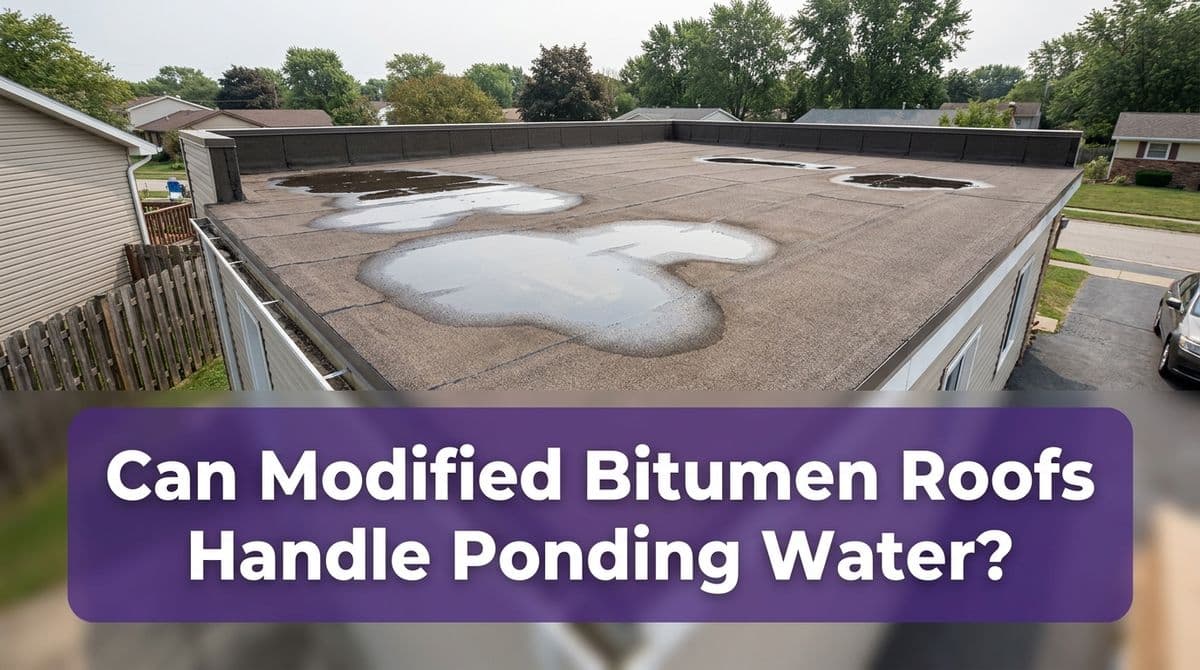
Why Ponding Water Matters on Flat Roofs
Modified bitumen roofing systems are designed to handle harsh weather, moisture, and temperature swings — which is why they’re a popular choice for many commercial and low-slope buildings.
But one question we hear often at Colorado Front Range Roofing is:
“Is it normal for water to sit on my modified bitumen roof after it rains?”
The short answer is: some temporary standing water can happen on low-slope roofs, but water that remains for days at a time should never be ignored.
Ponding water is one of the most common issues we inspect on modified bitumen roofing systems throughout Pueblo and Colorado Springs.
What Is Ponding Water?
In roofing, ponding water refers to water that remains on the roof surface for more than 48 hours after rainfall has stopped.
A properly functioning flat or low-slope roof should allow water to:
Flow toward drains
Exit through scuppers
Run toward gutters
Evaporate naturally within a reasonable timeframe
Small shallow puddles immediately after a storm are common. Long-lasting pools of standing water are what raise concerns.
Can Modified Bitumen Roofs Handle Standing Water?
Modified bitumen roofs are waterproof systems, which means they generally tolerate moisture better than many older roofing materials.
However, even durable mod-bit roofing systems can experience problems when ponding water becomes a long-term issue.
Over time, standing water can weaken vulnerable areas of the roof and shorten the lifespan of the system.
At Colorado Front Range Roofing, we always recommend addressing recurring ponding issues early before they lead to leaks or structural damage.
Common Problems Caused by Ponding Water
Accelerated Membrane Wear
Constant exposure to water and UV rays can gradually break down the roofing surface.
This may lead to:
Cracking
Surface deterioration
Drying and brittleness
Premature aging
Seams and flashing details are often the first areas affected.
Seam and Flashing Failures
Standing water places extra stress on:
Roof seams
Flashing around penetrations
Wall terminations
HVAC curbs
Pipe boots
Over time, weak points may separate or allow moisture intrusion.
Added Structural Weight
Water is extremely heavy.
Large areas of ponding can place significant stress on:
Roof decking
Insulation
Structural framing
If a roof already has low spots or sagging areas, ponding water can worsen the problem over time.
Debris and Algae Growth
Ponding areas tend to collect:
Leaves
Dirt
Organic debris
This buildup can clog drains and encourage algae or biological growth that further damages the roofing surface.
What Causes Ponding Water on Modified Bitumen Roofs?
In most cases, the roofing material itself is not the root cause.
Instead, ponding water usually develops because of drainage or structural issues.
Poor Roof Slope
Some flat roofs simply do not have enough pitch to move water effectively toward drains.
Even small low spots can trap water after storms.
Structural Settling or Sagging
Over time, roof framing or insulation may settle unevenly.
This creates depressions where water naturally collects.
Clogged Drains or Scuppers
Blocked drainage systems are one of the most common causes of ponding water.
Leaves, dirt, and roofing debris can prevent water from draining properly.
Improper Installation Details
Poorly designed penetrations, curbs, or transitions can interrupt water flow and create chronic low areas.
How Ponding Problems Are Fixed
The best solution depends on the severity of the ponding and the condition of the roof system.
Drain Cleaning and Drainage Improvements
Sometimes the issue is simple.
Clearing drains, scuppers, and gutters can dramatically improve drainage performance.
In some cases, additional drains may be recommended.
Tapered Insulation Systems
For more serious ponding issues, tapered insulation can be installed beneath the roofing membrane to create proper slope and direct water toward drainage points.
This is one of the most effective long-term solutions for chronic ponding.
Localized Roof Repairs
If ponding only affects certain sections, localized repairs may help correct low spots and restore drainage.
This often involves:
Reworking insulation
Adjusting roof elevations
Reinstalling roofing membrane sections
Roof Coatings
Protective roof coatings may help extend the life of an aging modified bitumen roof by improving UV resistance and adding an extra moisture barrier.
However, coatings do not replace proper drainage correction.
What Flat Roof Owners Should Watch For
If you own a modified bitumen roof, it’s important to monitor:
Water sitting longer than 48 hours
Recurring puddles in the same locations
New leaks or ceiling stains
Sagging roof areas
Overflowing drains or gutters
Algae or dark staining on the roof surface
Routine inspections and maintenance can often catch problems before they become expensive repairs.
Final Thoughts
Modified bitumen roofing systems are durable and reliable, but no flat roof performs well with long-term ponding water.
Small drainage problems can slowly turn into membrane damage, leaks, and structural concerns if left unaddressed.
At Colorado Front Range Roofing, we inspect low-slope and modified bitumen roofs throughout Pueblo and Colorado Springs to identify drainage issues early and recommend practical solutions that fit your building and budget.
If you’ve noticed standing water on your roof after storms, it may be time for a professional inspection before minor wear turns into major repairs.
Contact us here: