Nail Strip vs. Snap Lock vs. Mechanical Seam: Which Standing Seam Metal Roof Is Better?
Explore nail strip, snap lock, and mechanical seam metal roofing to determine which is best for your budget, design, and Colorado's weather conditions.
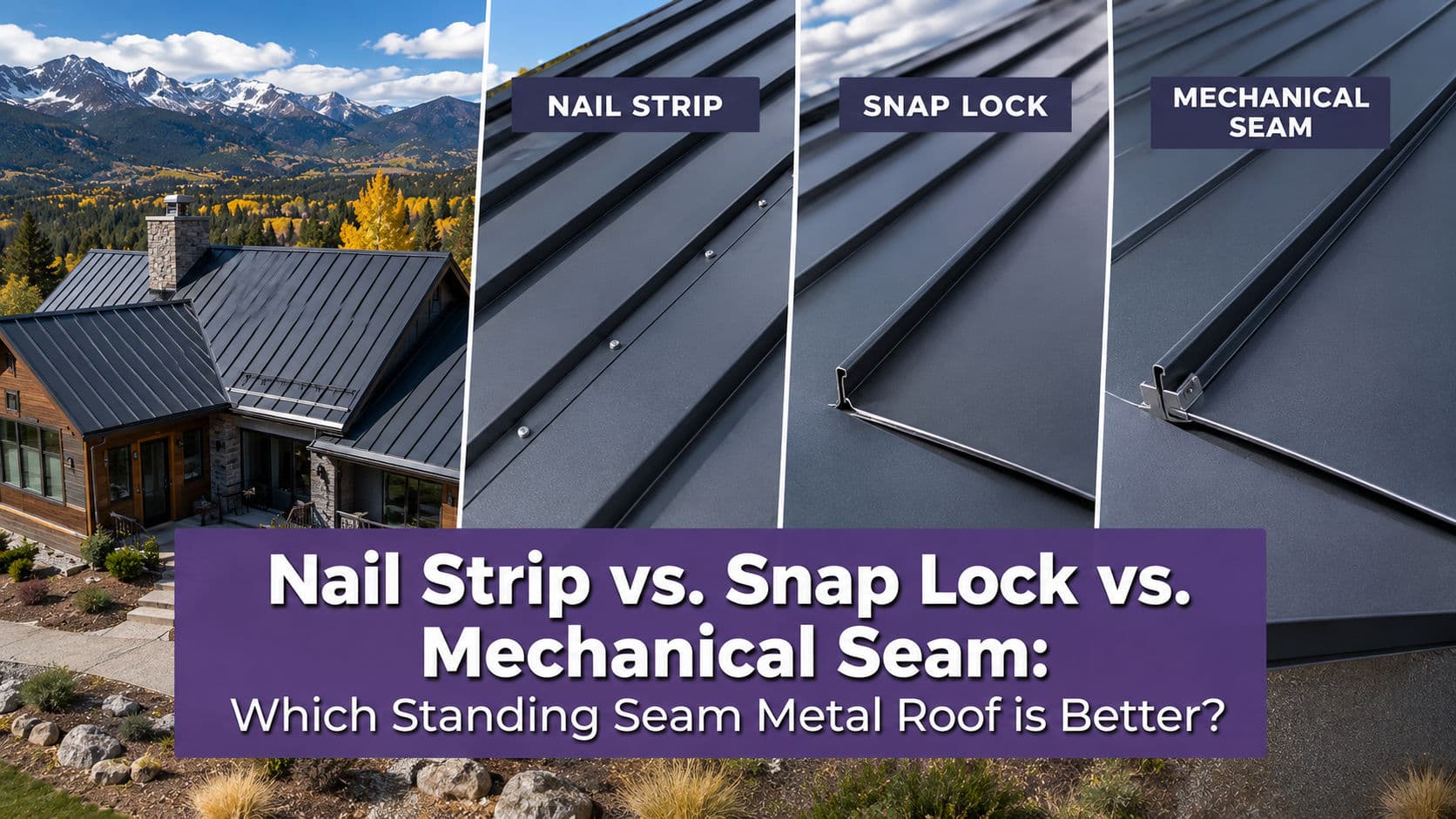
Understanding Standing Seam Metal Roofing
Standing seam metal roofing has become increasingly popular in Colorado because of its durability, modern appearance, and strong weather resistance.
But many homeowners don’t realize there are several different types of standing seam systems — and the installation method matters more than most people think.
Three of the most common standing seam systems are:
Nail Strip
Snap Lock
Mechanical Seam
Each system has different strengths, installation methods, and performance levels in Colorado’s harsh weather conditions.
Choosing the right one depends on factors like:
Budget
Roof slope
Wind exposure
Snow loads
Long-term performance expectations
Home design
What Is a Standing Seam Metal Roof?
Standing seam roofing uses vertical metal panels connected by raised seams that lock together above the roof surface.
Unlike exposed-fastener metal roofs, standing seam systems hide the fasteners beneath the panels, helping improve:
Weather resistance
Appearance
Expansion flexibility
Long-term durability
These systems are especially popular in Colorado because they handle:
Snow
Wind
UV exposure
Temperature swings
better than many traditional roofing materials.
Nail Strip Standing Seam Roofing
Nail strip systems — sometimes called fastener flange systems — are often considered the most entry-level standing seam option.
How Nail Strip Systems Work
Each panel includes a built-in fastening flange where screws attach directly to the roof deck.
The next panel snaps over the fasteners, hiding them from view.
Advantages of Nail Strip Roofing
Lower Cost
Nail strip systems are usually more affordable than other standing seam options.
Faster Installation
Because the fastening system is simpler, installation often moves more quickly.
Clean Appearance
Homeowners still get the sleek standing seam look without exposed screws.
Potential Drawbacks
Less Flexibility for Expansion & Contraction
Metal roofs naturally expand and contract with temperature changes.
Colorado’s dramatic temperature swings can place stress on nail strip systems because the panels have less room to move freely.
Lower Performance on Complex Roofs
Nail strip systems may not perform as well on:
Very large roof sections
Low-slope roofs
High-movement environments
More Oil Canning Risk
Some nail strip systems may show more visible waviness, known as oil canning, depending on panel width and installation conditions.
Snap Lock Standing Seam Roofing
Snap lock systems are one of the most popular residential standing seam options.
How Snap Lock Systems Work
Panels are secured using separate clips attached to the roof deck.
The metal panels then snap together over the clips.
This design allows the roof to better accommodate thermal movement.
Advantages of Snap Lock Roofing
Better Expansion Flexibility
Because the panels float on clips, snap lock systems handle expansion and contraction better than nail strip systems.
Cleaner Performance in Colorado Weather
Colorado’s frequent temperature swings make movement flexibility especially important.
Strong Appearance
Snap lock roofs maintain the modern standing seam look while offering improved long-term performance.
Faster Installation Than Mechanical Seam
Snap lock systems are typically easier and faster to install than fully mechanically seamed systems.
Potential Drawbacks
Higher Cost Than Nail Strip
Snap lock systems generally cost more because of the clip system and increased labor.
Not Ideal for Every Low-Slope Roof
Although durable, some low-slope applications may require a mechanically seamed system for maximum weather protection.
Mechanical Seam Standing Seam Roofing
Mechanical seam roofing is often considered the highest-performance standing seam system available.
How Mechanical Seam Systems Work
Panels are attached with clips and then mechanically crimped together using specialized tools.
The seams are tightly folded and sealed together.
Some systems use:
Single-lock seams
Double-lock seams
depending on the roof design and weather requirements.
Advantages of Mechanical Seam Roofing
Maximum Weather Resistance
Mechanical seams provide exceptional protection against:
Wind-driven rain
Snow infiltration
Heavy wind
Ice buildup
Excellent for Low-Slope Roofs
These systems are commonly used on commercial buildings and demanding roof designs because of their watertight performance.
Superior Long-Term Durability
Mechanical seam roofs are built for extremely long service life when installed properly.
Potential Drawbacks
Highest Installation Cost
Mechanical seam systems require:
Specialized equipment
More labor
Highly experienced installers
Longer Installation Time
The seaming process is more involved compared to snap lock or nail strip systems.
Which System Performs Best in Colorado?
Colorado weather creates unique roofing challenges.
Factors like:
Hail
Snow
Freeze-thaw cycles
High winds
Intense sun exposure
can all affect metal roof performance.
General Performance Comparison
Nail Strip Systems
Typically the most budget-friendly option
Faster and simpler installation process
Good performance for many residential homes
Less flexibility for thermal expansion and contraction
May show more oil canning on certain roof designs
Snap Lock Systems
Strong balance between cost and performance
Better movement flexibility during Colorado temperature swings
Very popular for residential standing seam roofs
Cleaner long-term performance than many nail strip systems
Usually more expensive than nail strip systems
Mechanical Seam Systems
Highest level of weather resistance
Excellent performance on low-slope roofs
Superior protection against wind-driven rain and snow
Most durable and watertight standing seam option
Higher installation cost and more specialized labor required
Which Standing Seam Roof Is Best for Residential Homes?
For many residential homes in Colorado:
Nail Strip
Best for:
Budget-conscious projects
Simpler roof layouts
Homeowners wanting the standing seam look at a lower cost
Snap Lock
Best for:
Most residential applications
Better long-term movement performance
Homeowners wanting durability without commercial-level cost
Mechanical Seam
Best for:
High-end roofing systems
Low-slope applications
Extreme weather exposure
Maximum durability goals
Installation Quality Matters More Than Many Homeowners Realize
Even the best metal roofing system can fail if installed improperly.
Common installation issues include:
Incorrect clip spacing
Improper flashing
Poor panel alignment
Expansion restriction
Inadequate underlayment
Improper seam engagement
That’s why it’s important to work with contractors experienced specifically in standing seam metal roofing systems.
Questions to Ask Before Choosing a Metal Roof
Before selecting a standing seam system, homeowners should ask:
Which system works best for my roof slope?
How does this system handle Colorado snow and hail?
Will thermal expansion be properly addressed?
What type of underlayment is included?
What warranties are offered?
Does the contractor specialize in standing seam installation?
Which panel thickness and finish are being used?
Understanding these details can help avoid costly issues later.
The Right Standing Seam Roof Depends on Your Goals
There’s no single “best” standing seam system for every home.
The right choice depends on balancing:
Budget
Performance expectations
Roof complexity
Long-term durability
Colorado weather exposure
For many homeowners, snap lock systems provide an excellent balance of performance and value.
For maximum durability and weather protection, mechanical seam systems are often considered the premium option.
If you’re considering a standing seam metal roof in Pueblo or anywhere along Colorado’s Front Range, Colorado Front Range Roofing can help evaluate your property, explain your options, and recommend the system that best fits your home and long-term goals.