Roof Repair vs. Roof Replacement: 5 Pueblo Warning Signs
Wondering if you need a roof repair or full replacement in Pueblo? Learn 5 warning signs you should never ignore and how to decide your best next step.
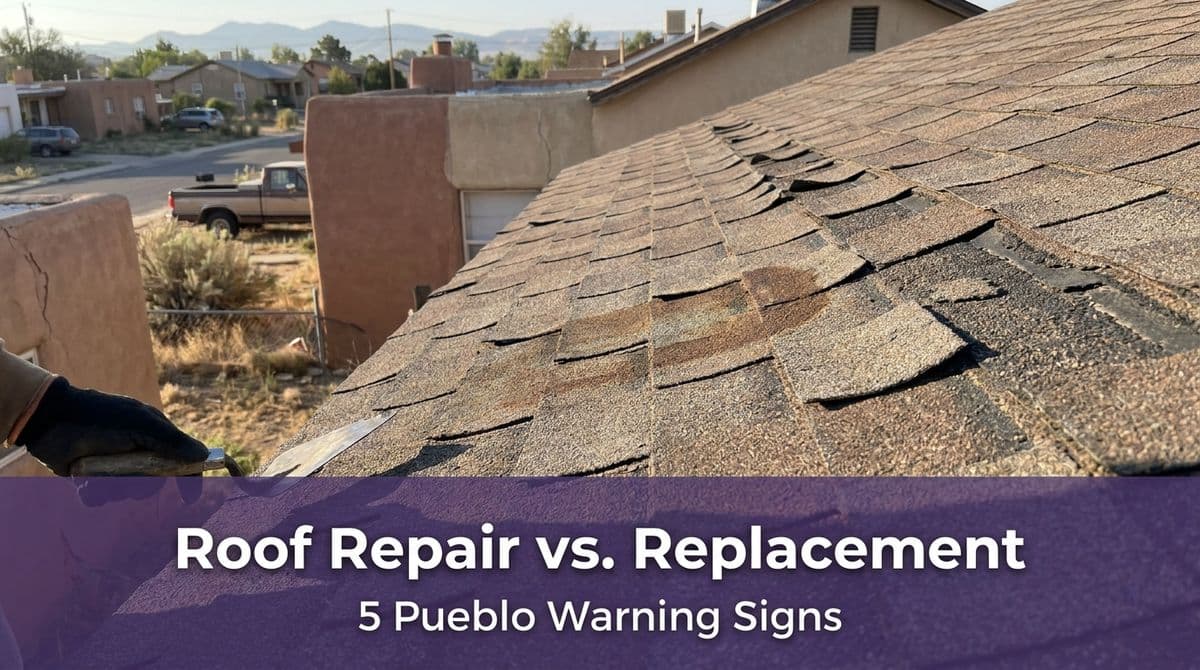
When a “Small Leak” Isn’t So Small Anymore
It usually starts with something small.
Maybe it’s a brown spot spreading across the ceiling after a spring storm. Maybe you notice a few shingles in the yard after a windy weekend. Or maybe there’s a drip in the attic that only appears during heavy rain.
One of the most common questions homeowners ask is:
“Can this just be repaired, or is it time for a full roof replacement?”
At Colorado Front Range Roofing, we hear that question every week from homeowners across Pueblo and Colorado Springs. And the truth is, sometimes a repair is absolutely the right call. Other times, continuing to patch an aging roof only delays bigger and more expensive problems.
The key is understanding the warning signs early before small roofing issues turn into major structural damage.
In this guide, we’ll walk through the five biggest signs Pueblo homeowners should never ignore when deciding between roof repair and roof replacement.
1. The Age of Your Roof Matters More Than You Think
One of the first things any roofing contractor should ask is:
“How old is your roof?”
In Pueblo and across Southern Colorado, roofing systems deal with intense UV exposure, hailstorms, high winds, snow, and dramatic temperature swings throughout the year. All of that shortens the lifespan of roofing materials.
Most asphalt shingle roofs in Colorado typically last:
18–25 years for standard asphalt shingles
30+ years for premium architectural shingles
40–70 years for metal roofing systems
50+ years for properly maintained tile roofing
However, lifespan depends heavily on:
Installation quality
Ventilation
Storm exposure
Maintenance history
Material quality
When Repair Makes Sense
A roof repair is often the best option if:
Your roof is under 10–12 years old
Damage is isolated to one area
Shingles are still flexible and in good condition
There are no recurring leak issues
When Replacement Makes More Sense
A roof replacement is usually smarter if:
Your roof is over 18–20 years old
Multiple repairs have already been performed
Shingles are brittle or losing granules
Leaks continue appearing in new areas
At a certain point, repeated repairs become more expensive than replacing the entire roofing system.
2. The Pattern of Damage Tells the Bigger Story
One ceiling stain or a few missing shingles may not seem like a major issue. But experienced roofers know the real problem is often larger than what’s visible from inside the home.
That’s why professional inspections evaluate the entire roof — not just the obvious trouble spot.
In Pueblo, hail and wind damage rarely affect only one section. Storm systems often impact entire slopes or multiple elevations of the roof at the same time.
Signs You May Only Need Repairs
Localized repairs may be enough if you have:
A few shingles missing after wind
Minor flashing damage
One isolated leak
Small sections of hail damage
Limited wear on an otherwise healthy roof
Signs You May Need Replacement
A full replacement is often recommended when we see:
Granule loss across multiple roof slopes
Curling or cracking shingles throughout the roof
Widespread hail bruising
Multiple weak spots
Aging materials across the entire system
At Colorado Front Range Roofing, we use advanced drone technology to inspect every part of the roof safely and thoroughly, helping homeowners understand the full picture before making a decision.
3. Recurring Leaks Usually Mean Bigger Problems
A leak that keeps returning is one of the strongest indicators that your roof system may be failing as a whole.
Sometimes homeowners repair interior drywall or repaint ceiling stains without addressing the root roofing issue. Unfortunately, that often leads to larger structural problems over time.
Warning Signs of Ongoing Roof Failure
Look for signs like:
Brown ceiling stains
Bubbling drywall or peeling paint
Mold or mildew growth
Damp attic insulation
Musty odors
Water spots appearing in different rooms over time
Even small leaks can lead to:
Rotting roof decking
Mold growth
Insulation damage
Increased energy bills
Structural weakening
If leaks continue appearing in multiple areas, replacement may provide a safer and more cost-effective long-term solution than repeatedly patching isolated sections.
4. Pueblo Storm and Hail Damage Can Shorten Roof Life Fast
Colorado weather is one of the biggest reasons homeowners end up needing roof replacement earlier than expected.
Pueblo experiences frequent:
Hailstorms
High wind events
Heavy snow accumulation
Intense UV exposure
Freeze-thaw cycles
Even when damage isn’t obvious from the ground, storms can weaken shingles and shorten the lifespan of the entire roofing system.
Signs of Storm Damage to Watch For
After major storms, homeowners should look for:
Missing shingles
Dented gutters or flashing
Granules collecting in gutters
Lifted or creased shingles
Water intrusion after storms
Soft or spongy roof areas
Localized storm damage can often be repaired if the roof is still relatively new. But widespread hail bruising or wind damage across multiple slopes usually makes replacement the smarter investment.
Insurance May Help Cover Replacement
In many cases, homeowners insurance may cover roof replacement if storm damage is properly documented.
As insurance-claim specialists, Colorado Front Range Roofing helps Pueblo homeowners navigate the process from inspection to final installation.
We document:
Hail impacts
Wind damage
Soft metal dents
Shingle bruising
Storm-related deterioration
This helps homeowners avoid confusion during the claims process and ensures damage is properly evaluated.
5. Sagging or Structural Issues Should Never Be Ignored
Some roofing issues go beyond shingles entirely.
One of the most serious warning signs is sagging or soft decking beneath the roofing materials. This can indicate long-term moisture intrusion or structural deterioration.
Common Structural Warning Signs
Watch for:
Visible dips along the roofline
Uneven roof sections
Soft spots while walking the roof
Rotting fascia boards
Water-damaged decking
Sagging valleys or ridges
Structural issues often require more than a simple repair. In many cases, portions of the roof decking must be replaced to restore the roof’s integrity and ensure it can withstand future storms and snow loads safely.
Ignoring these issues can eventually compromise the safety of the entire home.
Quick Checklist: Repair or Replace?
Roof Repair Often Makes Sense If:
Roof is under 12 years old
Damage is isolated
Shingles remain flexible
No recurring leaks are present
Storm damage is limited
Roof Replacement Is Usually Smarter If:
Roof is over 18–20 years old
Leaks continue appearing
Granule loss is widespread
Storm damage affects multiple slopes
Structural issues or soft decking are present
Final Thoughts
Roof problems rarely improve on their own. In fact, most major roofing issues begin as small warning signs homeowners hoped could wait a little longer.
Whether you’re dealing with aging shingles, storm damage, recurring leaks, or visible sagging, catching problems early can save thousands in future repairs and help protect your home long term.
At Colorado Front Range Roofing, we provide honest inspections, advanced drone assessments, and expert recommendations tailored to Colorado’s challenging climate conditions.
If you’re unsure whether your roof needs a repair or a full replacement, contact us today to schedule your free inspection.
FAQ
How do I know if I need roof repair or replacement?
Minor isolated damage can often be repaired, while widespread wear, recurring leaks, or an aging roof may require replacement.
How long does a roof replacement take?
Most residential roof replacements in Pueblo can be completed within one to three days depending on weather and roof size.
Does homeowners insurance cover hail damage?
In many cases, yes. Insurance often covers storm-related roof damage if it is properly documented during inspection.
What roofing materials work best in Colorado?
Asphalt shingles and standing seam metal roofing are popular choices because they perform well against hail, wind, snow, and UV exposure.
How often should I schedule a roof inspection?
Most roofing professionals recommend inspections once per year and after major storms.