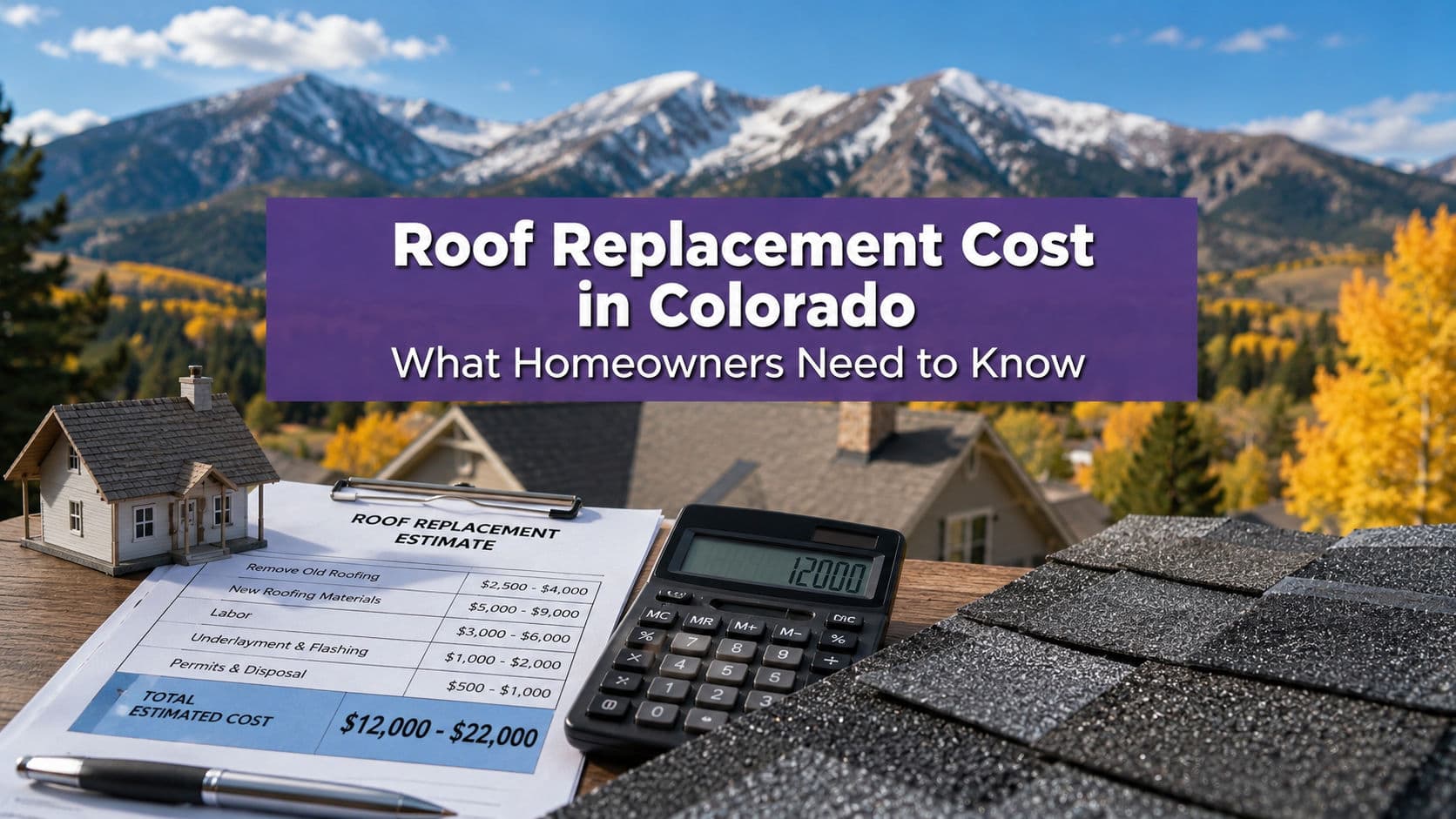
Roof Replacement Cost in Colorado
Understand the variables affecting roof replacement costs in Colorado. From material choices to local codes, learn what impacts prices and how to prepare.
Why Roof Replacement Costs Vary So Much
One of the first questions homeowners ask after roof damage or aging concerns is:
“How much does a new roof cost in Colorado?”
The answer depends on several important factors, because no two roofs are exactly alike.
Roof replacement pricing can vary based on:
Roof size
Roofing material
Roof complexity
Storm damage
Local code requirements
Labor costs
Ventilation upgrades
Underlying roof condition
In Colorado, weather conditions and building requirements can also increase roofing costs compared to some other states.
Average Roof Replacement Costs in Colorado
While every project is different, most Colorado homeowners can expect roof replacement costs to fall somewhere within a broad range depending on the material and scope of work.
Asphalt Shingle Roofs
Asphalt shingles are typically the most affordable roofing option.
Pricing often varies based on:
Shingle quality
Impact resistance rating
Roof size
Installation complexity
Metal Roofing
Metal roofing generally costs more upfront but may last significantly longer than traditional shingles.
Tile & Specialty Roofs
Tile, synthetic, and premium roofing systems usually come with higher installation costs because of:
Material weight
Structural considerations
Specialized labor
Installation complexity
The best way to understand actual pricing is through a professional inspection and estimate tailored to your property.
Roof Size Has a Huge Impact on Price
Larger roofs naturally require:
More materials
More labor
More disposal
Longer installation times
Roofing contractors usually calculate pricing based on “squares,” with one roofing square equal to 100 square feet.
However, square footage alone doesn’t determine total cost.
Roof Complexity Can Increase Labor Costs
A simple roof is much less expensive to replace than a complex one.
Features that often increase labor and installation difficulty include:
Steep roof pitches
Multiple roof levels
Dormers
Skylights
Chimneys
Valleys
Complex architectural designs
Steeper roofs may also require additional safety equipment and labor time.
Colorado Weather Impacts Roofing Costs
Colorado roofs face some of the harshest weather conditions in the country.
Roofing systems here must handle:
Hailstorms
High winds
Heavy snow
Freeze-thaw cycles
Intense UV exposure
Because of this, many homeowners choose upgraded materials designed for better storm resistance.
For example:
Class 4 impact-resistant shingles
Enhanced underlayment systems
Ice and water shield protection
Improved ventilation systems
These upgrades can increase upfront costs while potentially improving long-term durability.
Material Choice Changes Everything
The type of roofing material you select is one of the biggest pricing factors.
Asphalt Shingles
Most affordable and widely used.
Architectural Shingles
Typically thicker, more durable, and more attractive than basic 3-tab shingles.
Metal Roofing
Long lifespan and strong storm resistance but higher upfront investment.
Tile Roofing
Durable and visually distinctive, but heavier and more expensive to install.
Impact-Resistant Roofing Systems
Popular in Colorado because they may help reduce hail damage and potentially qualify for insurance discounts.
Each material offers different benefits in terms of:
Lifespan
Appearance
Maintenance
Storm protection
Energy efficiency
Hidden Damage Can Affect Final Cost
Sometimes the biggest roofing expenses aren’t visible until old materials are removed.
During replacement, contractors may discover:
Damaged roof decking
Rotting wood
Moisture damage
Ventilation issues
Improper previous installations
These hidden problems often need to be corrected before the new roof can be installed properly.
Permits & Code Requirements Matter
Most Colorado communities require roofing permits for full roof replacements.
Modern code requirements may include upgrades involving:
Ventilation
Ice and water shield
Drip edge installation
Flashing
Underlayment systems
Homes with older roofs may need additional work to meet current code standards.
Insurance May Cover Part of the Cost
Because Colorado experiences frequent hailstorms, many roof replacements involve insurance claims.
If storm damage is present, insurance may help cover eligible repair or replacement costs depending on:
Policy coverage
Deductible
Roof age
Storm documentation
Inspection findings
However, not every roof issue qualifies as covered storm damage.
That’s why professional inspections are important after major weather events.
Cheapest Isn’t Always Best
When comparing roofing estimates, it’s important to look beyond price alone.
A lower bid may sometimes mean:
Lower-quality materials
Reduced warranty coverage
Poor ventilation design
Inexperienced labor
Missing code upgrades
A properly installed roof often provides better long-term value than simply choosing the cheapest option available.
Questions to Ask Before Hiring a Roofing Contractor
Before signing a roofing contract, homeowners should ask:
Are permits included?
Is the contractor licensed and insured?
What warranties are provided?
Will damaged decking be replaced if needed?
What type of underlayment is included?
Is ventilation being evaluated?
Are the materials rated for Colorado weather?
Clear communication and written documentation help avoid surprises during the project.
A Roof Replacement Is an Investment in Your Home
Replacing a roof is a major project, but it’s also one of the most important investments homeowners make in protecting their property.
A quality roofing system can help provide:
Better storm protection
Improved energy efficiency
Increased home value
Reduced future repair costs
Longer roof lifespan
If you’re considering a roof replacement in Pueblo or anywhere along Colorado’s Front Range, Colorado Front Range Roofing can provide a professional inspection, explain your options, and help you better understand the factors affecting your roofing costs.