- Home
- Blog
- Roofing Details That Protect Your Home: Flashing, Drip Edge, Valleys & Wall Transitions Explained
Roofing Details That Protect Your Home: Flashing, Drip Edge, Valleys & Wall Transitions Explained
Discover essential roofing details like flashing and drip edges to protect your home. Understand installation techniques for optimal roofing performance.
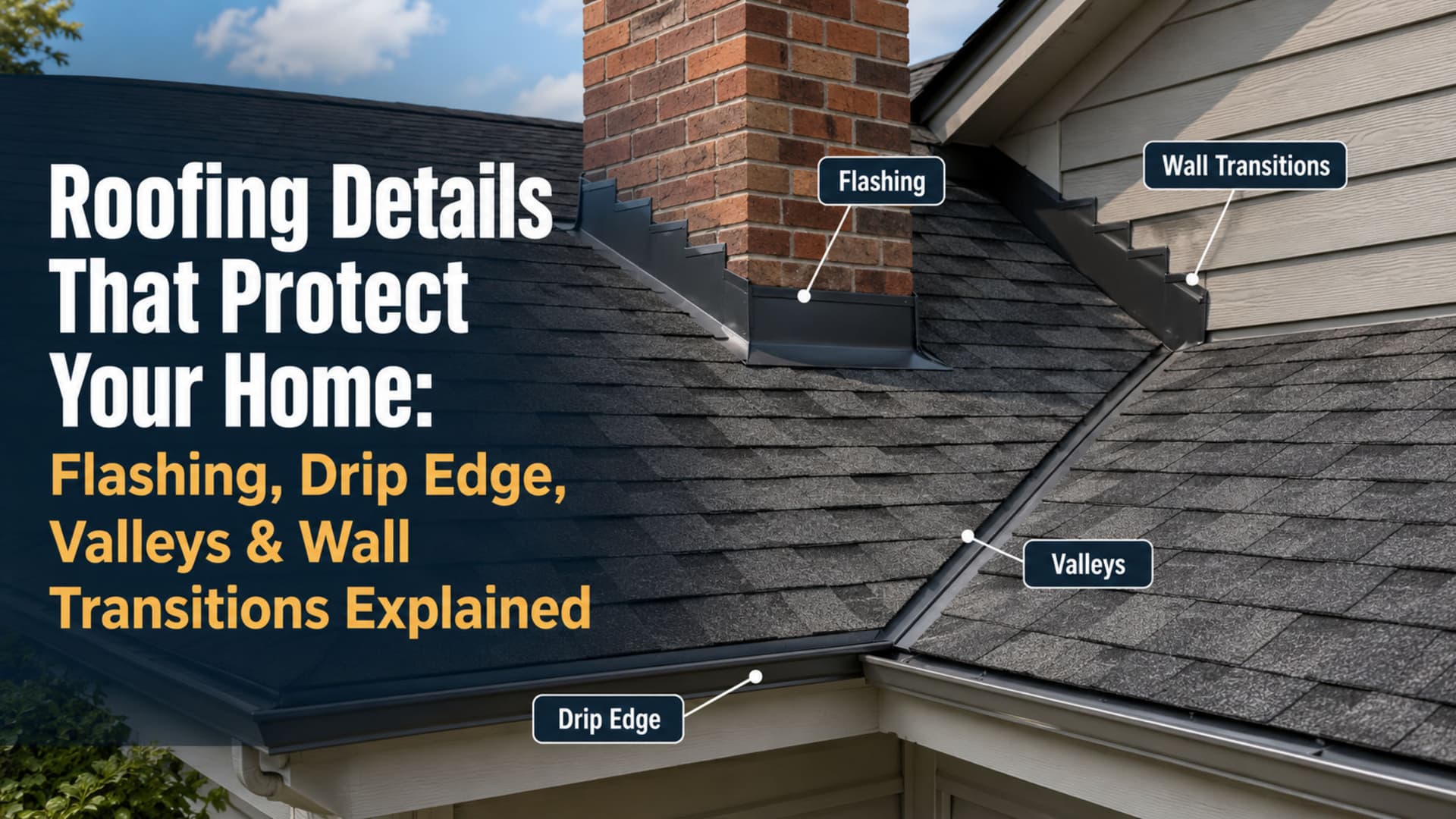
Roofing Details That Protect Your Home: Flashing, Drip Edge, Valleys & Wall Transitions Explained
When homeowners think about a roof, they usually picture the shingles. While shingles are an important part of your roofing system, they are only one piece of the puzzle. Some of the most critical components of a roof are the areas where water naturally collects or changes direction. These details—including flashing, drip edge, valleys, and wall enclosure transitions—work together to keep water out of your home.
Understanding these components can help you recognize quality workmanship and appreciate why professional installation matters.
Flashing: Your Roof’s Waterproof Barrier
Flashing is a thin piece of metal installed anywhere the roof meets another surface or where there is an opening through the roof. Its purpose is to direct water away from vulnerable areas and prevent leaks.
You’ll commonly find flashing around:
• Chimneys
• Plumbing vent pipes
• Skylights
• Roof-to-wall intersections
• Dormers
• Roof vents
Without properly installed flashing, water can seep beneath the roofing materials, leading to leaks, wood rot, mold growth, damaged insulation, and expensive structural repairs.
Quality flashing should be corrosion-resistant, properly overlapped, securely fastened, and integrated with the underlayment and shingles to create a continuous water-shedding system.
Drip Edge: Small Detail, Big Protection
Drip edge is a metal flashing installed along the edges of the roof. Although it may seem like a minor component, it serves several important functions.
A properly installed drip edge helps:
• Guide rainwater into the gutters.
• Prevent water from wicking beneath the shingles.
• Protect roof decking from moisture damage.
• Reduce fascia board deterioration.
• Help resist wind-driven rain.
• Improve the finished appearance of the roof.
In areas like Colorado, where snow, ice, high winds, and sudden storms are common, drip edge adds an extra layer of defense against the elements.
Roof Valleys: Where Water Flows the Most
A roof valley is the area where two roof slopes meet, creating a channel that directs large amounts of rainwater and melting snow toward the gutters.
Because valleys handle more water than almost any other part of the roof, they require careful installation.
There are several valley installation methods, including:
• Open metal valleys
• Closed-cut valleys
• Woven valleys
Each method has its place depending on the roof design, roofing material, and climate. Regardless of the style, valleys must be properly waterproofed with underlayment, flashing where needed, and precise shingle installation.
Poorly installed valleys are one of the most common causes of roof leaks because water naturally concentrates in these areas.
Wall Enclosure Transitions: Protecting Roof-to-Wall Connections
Whenever a roof meets a vertical wall, a transition must be created that allows water to flow safely away from the structure.
These transitions often require:
• Step flashing
• Counter flashing
• Kick-out flashing
• Sealants where appropriate
• Water-resistant underlayment integration
These components work together to direct water away from siding, windows, and the home’s framing.
One frequently overlooked detail is kick-out flashing. Its job is to divert water into the gutter instead of allowing it to run behind the siding. Without it, water can become trapped inside the wall, leading to hidden moisture damage, mold, and wood rot.
Why These Roofing Components Matter
Even the highest-quality shingles cannot protect your home if the roof’s transition points are installed incorrectly.
Most roof leaks occur at:
• Flashing failures
• Valleys
• Roof penetrations
• Chimneys
• Roof-to-wall intersections
• Improperly installed drip edges
That’s why experienced roofing contractors pay close attention to every detail—not just the shingles you can see.
Signs These Areas May Need Attention
Homeowners should watch for:
• Water stains on ceilings or walls
• Missing or loose flashing
• Rusted metal components
• Rotting fascia boards
• Water running behind gutters
• Damaged siding near roof lines
• Shingles deteriorating in roof valleys
• Interior leaks during heavy rain or melting snow
If you notice any of these warning signs, it’s important to schedule a professional roof inspection before minor issues become major repairs.
Why Professional Installation Matters
Roofing is more than laying shingles. Every piece of flashing, every valley, every drip edge, and every roof-to-wall transition must work together as one complete weatherproof system.
Professional roofers understand proper overlap, fastening methods, manufacturer specifications, ventilation requirements, and local building codes. Paying attention to these details helps maximize your roof’s lifespan and protects your investment for years to come.
Trust Colorado Front Range Roofing
At Colorado Front Range Roofing, we know that the strength of a roof is found in the details. Our experienced team carefully installs flashing, drip edge, valleys, and wall transitions using proven techniques and quality materials designed to withstand Colorado’s challenging weather conditions.
Whether you need a roof replacement, storm damage repair, or a comprehensive inspection, we’re committed to delivering craftsmanship you can trust and protection your home deserves.
Don’t wait for a leak to reveal hidden problems. Contact Colorado Front Range Roofing today to schedule a professional roof inspection and make sure every part of your roofing system is performing exactly as it should.