Thinking About Solar? What It Means for Your Roof
Thinking about solar? Learn when to replace your roof, how solar-ready roofs work, shingles vs. panels, code, insurance, and venting so you can plan for 20–30 years.
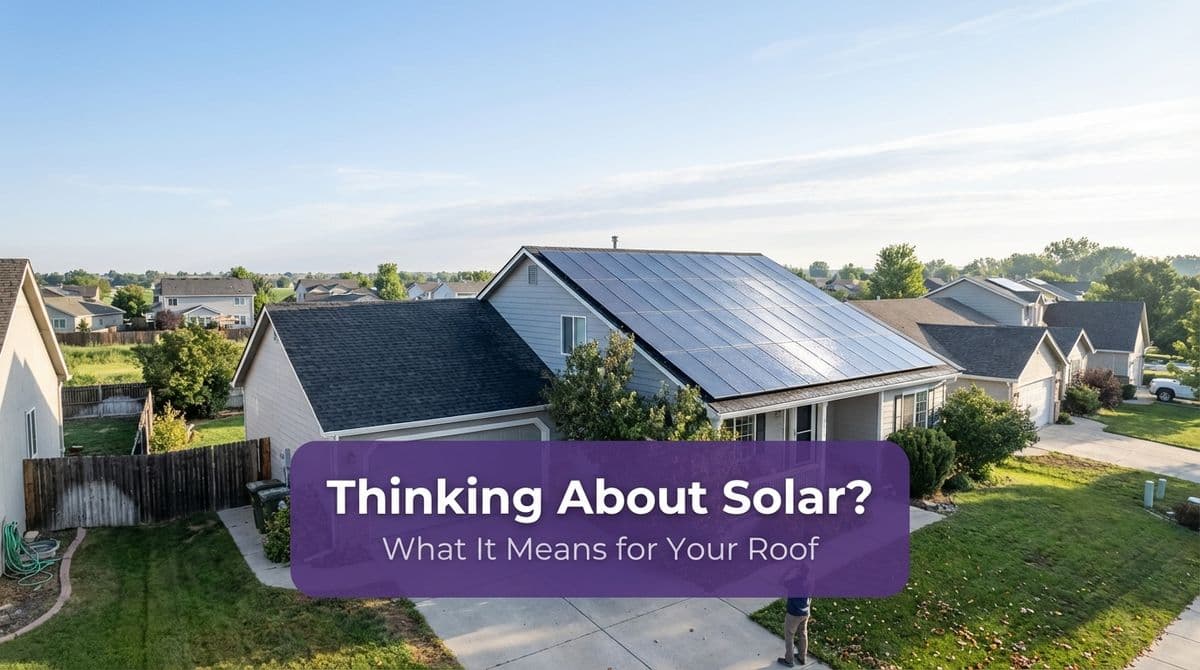
What You Should Know Before Installing Solar on Your Roof
If you’re considering solar for your home, you probably have questions like:
Do I need to replace my roof first?
Are roofs being built differently now because of solar?
What’s the difference between solar shingles and traditional panels?
How do codes, permits, and insurance come into play?
Will solar affect attic temperatures or ventilation?
How do I find a roofer who truly understands solar integration?
These are the right questions—because solar isn’t just an add-on anymore.
It’s changing how roofs are designed, built, and maintained.
Below is a practical guide to help you make a smart, long-term decision.
Roofs Are Becoming Energy Platforms — Not Just Protection
Traditionally, your roof had one job: keep weather out.
Today, it’s evolving into something more — an energy-producing platform.
That shift is influencing everything:
How roofs are designed
What materials are used
When replacements happen
How contractors approach projects
Instead of treating solar and roofing as separate systems, they’re increasingly being planned together as one integrated structure.
Do You Need to Replace Your Roof Before Solar?
One of the most common (and costly) mistakes is installing solar on a roof that won’t last as long as the system.
Here’s how to evaluate:
Age of the roof: If your asphalt shingle roof is 15+ years old, replacement is strongly recommended. Solar systems typically last 25–30 years.
Condition matters more than age: Curling shingles, granule loss, soft decking, or heavy repairs are red flags.
Roof type matters: Metal and tile roofs often last long enough to support a full solar lifecycle.
Why This Matters More Today
We’re seeing a growing trend of roof replacements happening earlier than expected—specifically to prepare for solar installation.
That’s because removing and reinstalling panels later is expensive and disruptive.
Planning ahead avoids that entirely.
What Is a “Solar-Ready” Roof?
Modern roofs are now being designed with solar in mind from day one.
A solar-ready roof focuses on:
1. Structure
The framing must support additional weight and wind loads. This may require engineering review or reinforcement.
2. Layout
Cleaner roof planes (fewer hips, valleys, and penetrations) improve solar efficiency and simplify installation.
3. Longevity-Focused Materials
Because solar systems stay in place for decades, roofing materials are increasingly selected for durability — not just upfront cost.
This represents a broader design shift toward longevity, where the roof is expected to perform reliably for the full lifespan of the solar system.
Solar Shingles vs. Traditional Solar Panels
Homeowners often compare these two options:
Traditional Solar Panels
Mounted on top of your existing roof
Higher efficiency (more power per square foot)
More cost-effective per watt
Easier to service or replace
Solar Shingles (BIPV – Building-Integrated Photovoltaics)
Function as both roofing material and energy generator
Lower-profile, more seamless appearance
Often used for aesthetics or HOA compliance
Typically lower efficiency than premium panels
Repairs require specialized expertise
The Bigger Picture
This isn’t just a product choice—it reflects the shift toward solar-integrated roofing systems, where energy production becomes part of the roof itself.
Building Codes, Permits & Regulatory Changes
Solar installations must comply with evolving building, fire, and electrical codes.
Key factors include:
Required setbacks for firefighter access
Structural load verification
Electrical and system safety compliance
Local permitting and inspections
Why This Is Changing
As solar adoption increases, codes and regulations are becoming stricter and more standardized.
That’s a good thing—it improves safety—but it also means proper planning and documentation are more important than ever.
Insurance & Risk Considerations
Adding solar changes your home’s risk profile.
Before moving forward:
Confirm how your insurance provider classifies solar (roof-mounted vs. integrated)
Verify coverage for wind, hail, and regional risks
Update your replacement cost if needed
Solar can increase your home’s insured value, and improper installation can introduce risk—making contractor quality even more important.
Thermal Performance & Roof Behavior
Solar doesn’t just generate energy—it changes how your roof handles heat.
Traditional Panels
Create shade and airflow above the roof
Can reduce direct heat exposure
May slightly lower attic temperatures
Solar Shingles
Sit flush with the roof surface
Require stronger attention to ventilation and underlayment
Why This Matters
This introduces new considerations around thermal management, including:
Heat retention vs. heat dissipation
Ventilation balance
Long-term material performance
A well-designed system accounts for all of this upfront.
Choosing the Right Roofer Matters More Than Ever
Solar adds complexity to what used to be a straightforward roofing job.
You’re no longer just hiring a roofer—you’re hiring someone who understands an integrated system.
Look for:
Experience with solar-mounted or solar-integrated roofing
Clear responsibility for penetrations and waterproofing
Coordination with solar installers
Understanding of structural and code requirements
Without that alignment, projects can run into delays, miscommunication, or costly fixes later.
Behind the Scenes: Industry Shifts You Should Be Aware Of
Solar isn’t just changing homes—it’s reshaping the roofing industry itself.
For Contractors, Solar Represents:
Revenue expansion into new services
Cross-trade leverage between roofing and energy
Higher-margin positioning for specialized work
But It Also Creates Challenges:
Technical training requirements (roofing + electrical knowledge)
New installation methods and materials
More complex project coordination
Operational Impact:
Longer planning timelines
Increased documentation and compliance
Greater pressure on scheduling and workforce
In short, solar is pushing the industry toward a more advanced, system-based approach.
Traditional vs. Solar-Integrated Roofing: A Shift in Strategy
We’re moving from:
Traditional Roofing
Focused on protection only
Shorter lifecycle planning
Simpler installation process
To:
Solar-Integrated Roofing
Combines protection + energy production
Requires long-term performance planning
Involves multiple trades and technologies
This shift is changing how projects are priced, planned, and executed.
Long-Term Implications for Homeowners
All of these changes lead to one important takeaway:
Solar is not just an upgrade—it’s a long-term structural decision.
When done right, it provides:
Better energy efficiency
Increased home value
Fewer future disruptions
Stronger long-term cost control
When done poorly, it can lead to:
Expensive rework
Roofing conflicts
Insurance complications
Planning correctly from the start makes all the difference.
The Bottom Line
Solar is transforming roofing—from materials and design to installation and long-term performance.
For homeowners, that means thinking beyond just panels or shingles.
It means understanding how your entire roofing system will perform over the next 20–30 years.
The best results come from treating your roof and solar system as one unified investment—not two separate projects.
When you do that, you get a home that’s not only protected—but also working for you every day.