Beware of “Storm Chasers”: How to Spot Roofing Scams After a Storm
Discover how to spot roofing scams and protect your home after a storm. Learn about common warning signs of storm chaser contractors and ensure you hire reputable services.
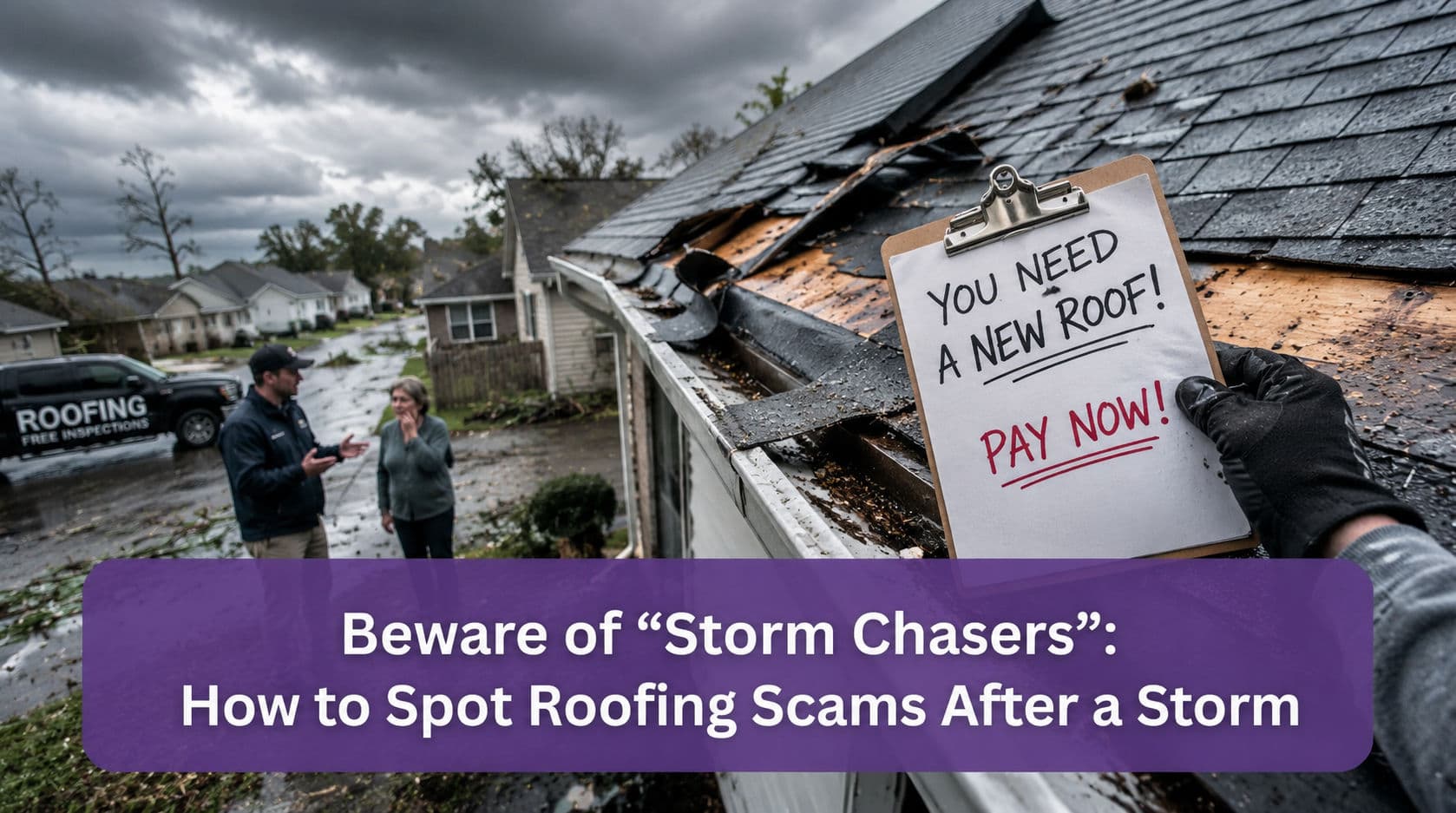
Why Storm Chasing Roofing Scams Are So Common
After a major hailstorm or wind event, it’s common to see roofing companies suddenly flood neighborhoods offering “free inspections” and promising fast repairs.
Some of these contractors are legitimate.
Others are what the roofing industry often calls “storm chasers” — out-of-town contractors who follow severe weather across the country looking for quick insurance jobs before disappearing to the next storm zone.
At Colorado Front Range Roofing, we’ve seen homeowners throughout Pueblo and Colorado Springs pressured into rushed decisions, incomplete work, and even insurance problems after hiring the wrong contractor.
The good news is that most roofing scams follow predictable patterns. Knowing the warning signs can help you avoid expensive mistakes and protect your home after a storm.
What Is a “Storm Chaser” Roofing Contractor?
A storm chaser is typically a roofing company or sales crew that travels into areas recently hit by severe weather.
Their goal is usually to:
Sign contracts quickly
Collect insurance money fast
Complete jobs as cheaply as possible
Move on before problems appear
Some may use temporary local addresses, rented offices, or aggressive door-to-door sales tactics to appear established in the area.
Unfortunately, many homeowners don’t realize there’s a problem until:
Workmanship issues appear
Warranties become impossible to use
The company disappears
Insurance paperwork becomes complicated
Common Warning Signs of Roofing Scams
High-Pressure Sales Tactics
One of the biggest red flags is pressure.
Be cautious if someone:
Demands immediate signatures
Says “you must act today”
Pushes you to file insurance claims immediately
Uses fear-based sales tactics
Offers deals “only available right now”
A trustworthy roofing contractor should give homeowners time to review estimates, ask questions, and compare options.
Door-to-Door Solicitation Right After a Storm
While some legitimate roofers do neighborhood outreach after storms, aggressive door knocking immediately after severe weather can be a warning sign.
Scam contractors often target neighborhoods where:
Hail recently occurred
Insurance claims are likely
Homeowners are stressed or overwhelmed
Always research the company independently before agreeing to inspections or signing paperwork.
Extremely Low Bids
If one roofing estimate is dramatically lower than everyone else’s, there’s usually a reason.
Low bids may mean:
Cheap materials
Unlicensed labor
Missing permits
Incomplete work
No real warranty coverage
A roof replacement is a major investment, and extremely low pricing often leads to shortcuts that create bigger expenses later.
Asking for Large Upfront Payments
Another major warning sign is demanding large cash payments before work begins.
Be cautious if a contractor asks for:
Full payment upfront
Large cash deposits
Payment before materials arrive
Insurance checks signed over immediately
Legitimate roofing companies usually follow structured payment schedules tied to project progress.
No Local Presence
Many storm chasers disappear once jobs are finished.
Before hiring any contractor, verify:
Local office location
Colorado licensing and insurance
Online reviews
Business history
Local references
A company with deep roots in Pueblo or Colorado Springs is much more likely to stand behind its workmanship long term.
At Colorado Front Range Roofing, we’ve proudly served Southern Colorado for years with thousands of completed projects and long-standing community relationships.
Roofing Scam Tactics Homeowners Should Watch For
“We’ll Cover Your Deductible”
This is one of the most common roofing scam tactics.
In many states, including Colorado, waiving or manipulating insurance deductibles can create legal and insurance issues.
If a contractor promises:
“Free roofs”
“No deductible”
“Insurance pays for everything”
…that’s a major red flag.
Fake Storm Damage Claims
Some unethical contractors exaggerate or even invent storm damage to pressure homeowners into unnecessary claims.
This can lead to:
Claim denials
Insurance complications
Increased premiums
Unnecessary roof replacements
A reputable roofer should clearly explain and document any damage with photos and honest recommendations.
Poor or Missing Contracts
Never agree to roofing work without a detailed written contract.
The contract should clearly outline:
Scope of work
Materials being used
Warranty details
Payment schedule
Cleanup responsibilities
Estimated timeline
If paperwork feels vague or rushed, slow down before signing anything.
How to Protect Yourself After a Storm
Get Multiple Estimates
Comparing estimates helps homeowners identify:
Unrealistic pricing
Missing scope items
Material differences
Warranty differences
Don’t automatically choose the cheapest estimate.
Verify Licensing and Insurance
Always confirm the contractor carries:
General liability insurance
Workers’ compensation coverage
Proper licensing where required
This protects homeowners from liability if accidents occur during the project.
Ask About Warranties
A trustworthy roofing contractor should explain:
Manufacturer warranties
Workmanship warranties
What is and isn’t covered
Warranty duration
At Colorado Front Range Roofing, we provide workmanship warranties and install roofing systems backed by trusted manufacturers for long-term protection.
Review Photos and Inspection Reports
Professional roof inspections should include:
Clear photos
Documentation of storm damage
Honest repair recommendations
Explanations homeowners can understand
If a contractor refuses to show evidence of damage, that’s a serious concern.
Why Local Roofing Contractors Matter
Local roofing companies have reputations to maintain within the community.
That usually means:
Better accountability
Faster follow-up service
Easier warranty support
Familiarity with Colorado weather conditions
Long-term customer relationships
Storm chasers often leave town once projects are complete, making future repairs or warranty claims difficult or impossible.
Working with an established local contractor provides peace of mind long after the storm passes.
Final Thoughts
Storm damage is stressful enough without worrying about roofing scams and unreliable contractors.
The best way to protect yourself is to slow down, verify credentials, ask questions, and work with a trusted local roofing company that prioritizes transparency and long-term service over quick sales.
At Colorado Front Range Roofing, we provide honest inspections, detailed documentation, and professional roofing solutions homeowners can trust throughout Pueblo and Colorado Springs.
If your home was recently impacted by hail or wind and you’d like a professional inspection from a local team, contact us here:
https://coloradofrroofing.com/contact-us
FAQ
What is a storm chaser roofing company?
A storm chaser is typically an out-of-town contractor who follows severe weather events looking for quick roofing jobs before moving on to another area.
Are all door-to-door roofers scams?
No, but homeowners should be cautious and thoroughly research any contractor before signing contracts or making payments.
Should I pay a roofer upfront?
Small deposits are common, but large upfront payments or full payment before work begins are major red flags.
How do I verify a roofing contractor?
Check for local references, insurance, online reviews, licensing, and an established business presence in your area.
What should a roofing contract include?
A roofing contract should clearly outline materials, scope of work, pricing, warranties, payment terms, and project timelines.