Why Are My Shingles Curling, Buckling, or Blistering?
Discover why your shingles are curling, blistering, or buckling. Learn about ventilation, moisture, and other causes. Protect your roof and home with insights.
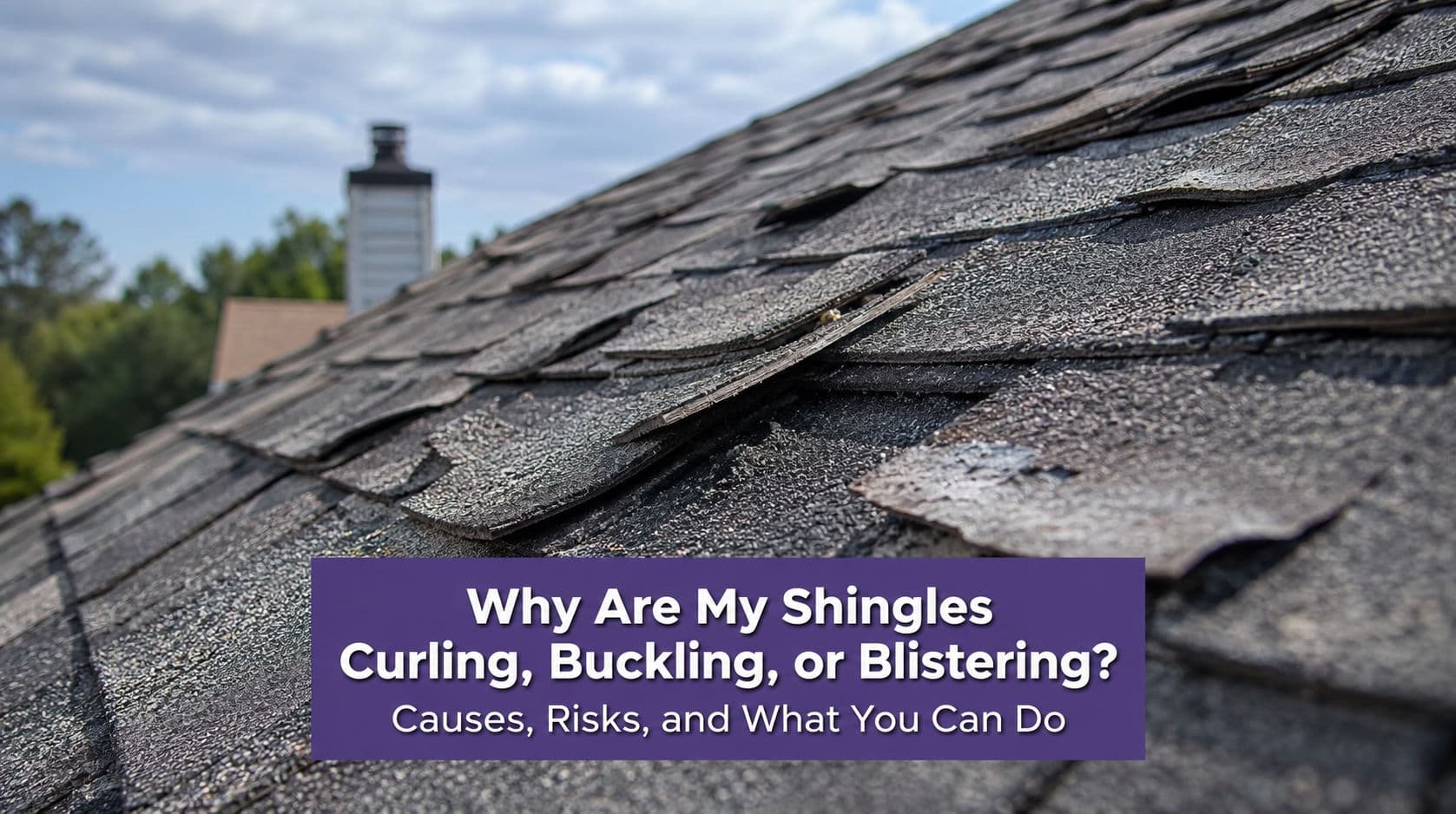
What Damaged Shingles Are Trying to Tell You
If you’ve noticed shingles on your roof starting to curl, buckle, or blister, it’s usually a sign that something isn’t functioning properly beneath the surface.
While some roofing issues develop naturally with age, others may point to:
Ventilation problems
Moisture buildup
Storm damage
Installation mistakes
Material deterioration
In Colorado, roofs experience intense weather conditions year-round, which can accelerate shingle wear faster than many homeowners expect.
Understanding what causes these issues can help you determine whether your roof needs repairs, maintenance, or full replacement.
What Do Curling, Buckling, and Blistering Mean?
Although homeowners often group these problems together, they can indicate different roofing issues.
Curling Shingles
Curling occurs when shingle edges begin lifting or turning upward.
This may appear as:
Corners curling upward
Edges lifting
Shingles shrinking over time
Buckling Shingles
Buckling creates visible waves or distortions across sections of the roof.
Shingles may appear uneven or raised in certain areas.
Blistering Shingles
Blistering looks like small bubbles or raised pockets on the shingle surface.
Over time, these blisters may crack open and expose the underlying material.
Each issue can affect roof performance differently, but all should be inspected before larger problems develop.
Roof Age Is One of the Most Common Causes
One of the simplest explanations is normal aging.
As asphalt shingles get older, they gradually lose:
Flexibility
Protective granules
Waterproofing ability
Colorado’s strong UV exposure and frequent temperature swings can speed up this process significantly.
Older roofs are more likely to experience:
Curling edges
Cracking
Granule loss
Surface deterioration
If your roof is approaching the end of its expected lifespan, widespread shingle damage may indicate replacement is becoming necessary.
Poor Attic Ventilation Can Damage Shingles
Ventilation problems are a major cause of premature roof deterioration.
Without proper airflow, heat and moisture become trapped inside the attic.
That excess heat can literally bake shingles from underneath during Colorado summers.
Poor ventilation may contribute to:
Curling shingles
Buckling
Moisture damage
Reduced roof lifespan
Higher energy bills
Signs of ventilation problems may include:
Extremely hot attic temperatures
Mold or moisture in the attic
Ice dams during winter
Uneven roof aging
Proper intake and exhaust ventilation are critical for long-term roof performance.
Moisture Problems Beneath the Roof
Buckling shingles often point to moisture-related issues below the surface.
Possible causes include:
Roof leaks
Trapped humidity
Wet roof decking
Underlayment failure
When moisture affects the roof deck, the wood may warp or shift, causing visible distortions in the shingles above it.
In Colorado, freeze-thaw cycles can make hidden moisture problems even worse over time.
Improper Roof Installation
Installation quality has a major impact on roof lifespan.
Even high-quality shingles can fail early if installed incorrectly.
Common installation mistakes include:
Improper nailing patterns
Poor ventilation design
Incorrect underlayment installation
Inadequate fastening
Shingles installed over damaged decking
Improper spacing between materials
Poor workmanship can sometimes lead to curling or buckling only a few years after installation.
That’s why choosing an experienced roofing contractor matters so much.
Colorado Heat & UV Exposure Accelerate Wear
Many homeowners don’t realize how intense Colorado sunlight can be on roofing materials.
At higher elevations, UV exposure becomes significantly stronger.
Over time, constant sun exposure can cause shingles to:
Dry out
Become brittle
Lose flexibility
Crack or curl
South-facing roof slopes often show wear sooner because they receive more direct sunlight throughout the day.
Storm Damage May Be Contributing
Colorado storms can weaken roofing materials long before leaks appear inside the home.
Wind and hail may loosen shingles, damage protective granules, or create stress points that eventually lead to:
Curling
Cracking
Surface blistering
Premature aging
After major storms, even subtle roof damage should be professionally inspected.
Sometimes storm-related deterioration develops slowly over several seasons.
Can Curling or Buckling Shingles Be Repaired?
It depends on the severity and cause of the issue.
Repairs May Be Possible If:
Damage is isolated to a small section
The roof is relatively new
Underlying decking remains solid
Ventilation problems can be corrected
Replacement May Be Recommended If:
Damage is widespread
The roof is older
Multiple layers are failing
Moisture damage exists beneath the shingles
Structural issues are present
A professional inspection is usually the best way to determine the safest and most cost-effective option.
Warning Signs You Shouldn’t Ignore
Roof problems often become more expensive the longer they’re left untreated.
Signs it’s time to schedule an inspection include:
Curling or lifting shingle edges
Visible roof waviness
Missing granules in gutters
Interior water stains
Sagging roof sections
Increased energy bills
Repeated roof leaks
Mold or attic moisture
Catching roofing issues early can sometimes prevent larger structural repairs later.
Healthy Shingles Protect Your Entire Home
Your shingles serve as your home’s first layer of protection against Colorado’s harsh weather conditions.
When shingles begin curling, buckling, or blistering, it’s usually a warning sign that the roof system is under stress.
Addressing the problem early can help:
Prevent leaks
Extend roof lifespan
Improve energy efficiency
Reduce storm vulnerability
Avoid larger repair costs
If you’ve noticed unusual changes in your roof, Colorado Front Range Roofing can help inspect the problem, identify the cause, and recommend the best path forward for your home.